Chicken Rasam Recipe | Kohzi Rasam

on Nov 18, 2026
This post may contain affiliate links. Please read our disclosure policy.
This Chicken Rasam Recipe is super comforting. It’s warming, spicy, delicious, and the perfect thing to slurp on a cold winter evening.
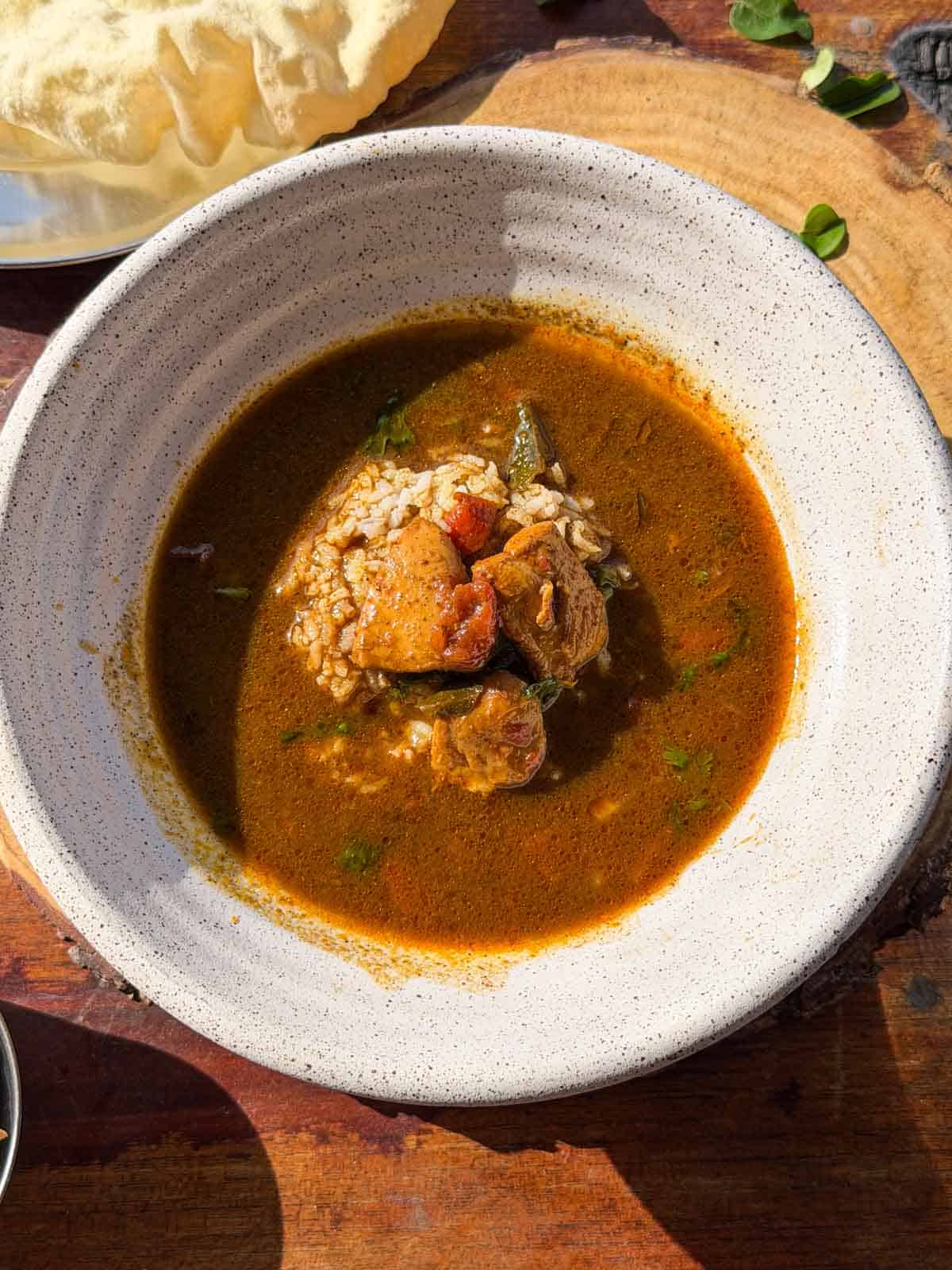
Chicken rasam is one of those recipes that you simply need to try this winter season. It’s a delicious twist on classic South Indian rasam, made with tender chicken pieces simmered in a freshly ground, peppery masala. It’s tangy, garlicky and wonderfully comforting, with a flavourful broth that’s perfect for pouring over hot rice or sipping on its own. The best part? Everything comes together in one pot, making it an easy, fuss-free meal!
I love eating this on its own like soup, especially now that the weather is cooling down. But you can eat it with rice, idli, dosa, or appams for a wholesome, filling, South Indian meal.
jump to section: chicken rasam
Ingredients for Chicken Rasam
Chicken: Bone-in curry cut chicken lends the best flavor to this recipe. You could use boneless chicken, but avoid breast pieces as they tend to get chewy
Spices: This recipe uses a bunch of spices both in the rasam paste and rasam. The spices used include cumin seeds, pepper corn, whole red chilli, green chilli, and turmeric powder for flavor, warmth, and color
Aromatics: garlic cloves and ginger used in the rasam paste and rasam for flavor and aroma
Herbs: Curry leaves and coriander for earthy, fresh flavor
Tomato: Forms the base of the rasam. Adds tang and flavor
Tamarind: Adds tanginess and brightness
Water: To adjust the consistency of the rasam
Oil: Any neutral-flavored oil to fry the spices and masala to make the rasam
Salt: For seasoning
Frequently Asked Questions
Yes! You can use boneless chicken thighs or breast instead of bone-in chicken. Chicken thighs will stay juicier, while chicken breast cooks faster, so adjust the cooking time accordingly. I recommend cutting the chicken into bite-sized pieces.
This recipe uses a freshly ground rasam paste rather than ready-made rasam powder. The freshly roasted spices, garlic, ginger, tomato and tamarind give it a lovely depth of flavour. I recommend sticking to the paste for the best results.
It has a lovely peppery heat from the peppercorns, along with a little heat from the green chillies. You can reduce the peppercorns or skip one of the green chillies if you prefer a milder rasam.
Tamarind adds the characteristic tanginess to rasam, so I wouldn’t recommend skipping it entirely. If you don’t have tamarind, you can use a little lemon juice instead. Add it towards the end of cooking, adjusting to taste.
Richa’s Top Tips
- Roast the spices on low heat: Take your time roasting the cumin, peppercorns and coriander seeds. This helps release their aromas and gives the rasam a deeper, more robust flavour. Be careful not to burn them, as this can make the paste bitter.
- Grind the paste smoothly: Blend the roasted spices with the remaining ingredients until you have a smooth paste. This helps the flavours come together beautifully in the rasam.
- Cook the masala well: Don’t rush cooking the ground rasam paste. Let it cook for 3-4 minutes, until the raw smell disappears and oil starts separating around the edges. This makes a big difference to the final flavour.
- Let the chicken absorb the masala: Saute the chicken in the cooked masala for 2-3 minutes before adding water. This helps coat the pieces evenly and gives the broth a more flavourful base.
- Adjust the consistency: This chicken rasam is meant to be brothy and light. If you prefer a stronger, more concentrated rasam, reduce the water slightly or let it simmer uncovered for a few extra minutes.
Storage Instructions
- Refrigeration: Allow the chicken rasam to cool completely before transferring it to an airtight container. Refrigerate for up to 3 days.
- Freezing: You can freeze chicken rasam for up to 2 months in freezer-safe containers. Leave a little room at the top for expansion.
- Reheating: Thaw frozen rasam overnight in the refrigerator. Reheat on the stovetop over medium-low heat until piping hot. Add a splash of water if the broth has reduced or thickened.
- Meal prep: You can also prepare the rasam paste ahead of time and refrigerate it in an airtight container for up to 2 days. When ready to cook, simply use it as directed in the recipe.
Serving Ideas
- With steamed rice: My favourite way to enjoy chicken rasam is poured over a bowl of hot steamed rice. Add a little ghee on top for a comforting meal.
- With idli or dosa: Serve it alongside soft idlis or crispy dosas instead of regular sambar. The peppery broth is lovely for dipping.
- As a soup: Serve it piping hot in a bowl with the chicken pieces and a little freshly chopped coriander. It’s especially comforting on a rainy or chilly day.
- With South Indian sides: Pair it with a simple poriyal, beans thoran or potato fry for a complete meal.
- With appalam: A crispy appalam or papad on the side adds a lovely crunch and makes this a delicious, fuss-free meal.
Customisation Ideas
- Make it extra peppery: If you love a strong peppery kick, increase the peppercorns by another teaspoon.
- Add more aromatics: A few extra curry leaves or an additional clove of garlic can make the rasam even more fragrant.
- Adjust the tanginess: Add a little extra tamarind if you like your rasam on the tangier side. You can also balance it with a tiny pinch of sugar if needed.
- Add vegetables: You can add drumsticks, carrots or chopped radish to make this a heartier, more wholesome soup. Add them early enough to cook through.
- Make it milder: Reduce the peppercorns and green chillies for a gentler version that still has all the lovely rasam flavours.
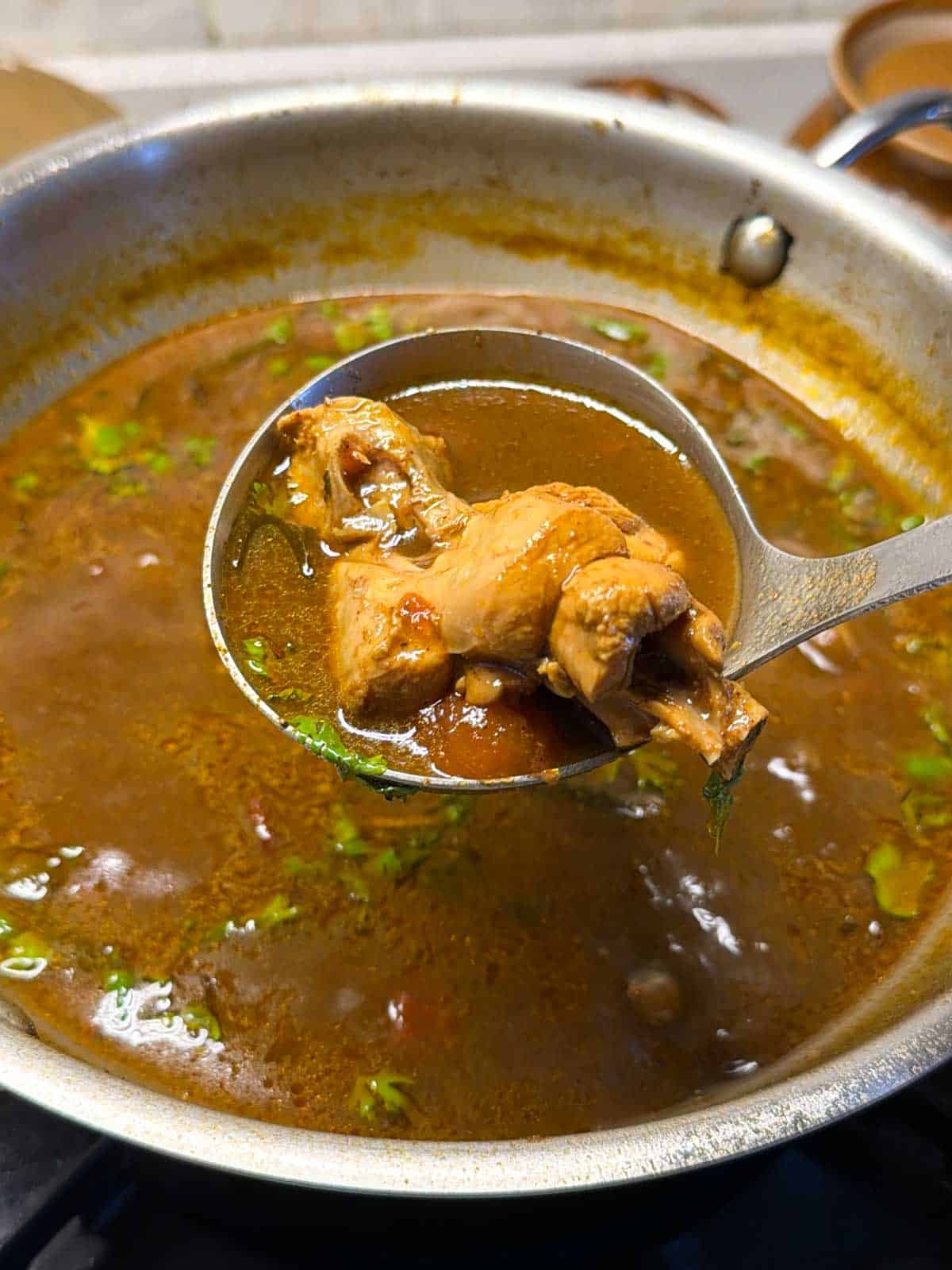
This chicken rasam is one of those comforting recipes that’s so much more than just a soup. It’s peppery, tangy, garlicky and packed with flavour, with tender pieces of chicken simmered in a freshly ground rasam masala. Serve it with hot rice for a simple, nourishing meal or enjoy a bowl on its own whenever you’re craving something warm and comforting. It’s easy to make, comes together in one pot and is definitely worth adding to your regular dinner rotation!
If you make this recipe, DM me your pictures over on my IG @my_foodstory. I love seeing your recreations!
Watch Chicken Rasam Recipe Video
Chicken Rasam
Ingredients
- 250 grams bone-in curry cut chicken, cut into 1 ½ inch pieces
For rasam paste
- 1 tablespoon cumin seeds
- 2 teaspoons pepper corns
- ½ tablespoon coriander seeds
- 10 curry leaves
- 5 cloves garlic, peeled
- ½ inch ginger, peeled
- 1 green chilli
- 1 large tomato, roughly chopped, approx. 100 grams
- ½ tablespoon tamarind
- ⅓ cup coriander leaves
- ¼ cup water
For making rasam
- 2 teaspoons groundnut or any neutral flavoured cooking oil
- 1 teaspoon cumin seeds
- 2 sprigs curry leaves
- 1 red chilli, whole
- 1 green chilli, slit
- 5 garlic cloves, unpeeled, lightly smashed
- 1 large tomato, chopped, approx. 100 grams
- ¼ teaspoon turmeric powder
- 1 ¼ teaspoon salt
- 3 cups water, divided
- 1 tablespoon chopped coriander leaves
Instructions
Rasam paste:
- Heat a pan, add cumin seeds, pepper corns, coriander seeds, curry leaves and dry roast on low to medium till they are lightly roasted and fragrant.
- Add the roasted ingredients to a mixer jar. Add garlic, ginger, tomato, tamarind, coriander leaves, ¼ cup of water and grind to a smooth paste.
Making chicken rasam:
- Heat a kadai or pot with oil, add cumin seeds and once they crackle, add curry leaves, red & green chillies, garlic cloves and roast for 1-2 minutes on low till the rawness of garlic goes. Add tomatoes, turmeric powder, salt and saute for a few seconds on low heat.
- Add the ground paste and cook covered for 3-4 minutes till oil separates from the sides of the kadai. Add chicken and saute for 2-3 minutes till the chicken absorbs the masalas. Add ½ cup of water to the mixer to wash out all the masalas & add it to the kadai. Add the remaining 2 ½ cups of water to the kadai and cook covered for 14-15 minutes till the chicken is cooked well. Garnish with coriander leaves and serve.
Video
Nutrition
This article was researched and written by Urvi Dalal.