One-Pot Peanut Butter Ramen Noodles

on May 16, 2026
This post may contain affiliate links. Please read our disclosure policy.
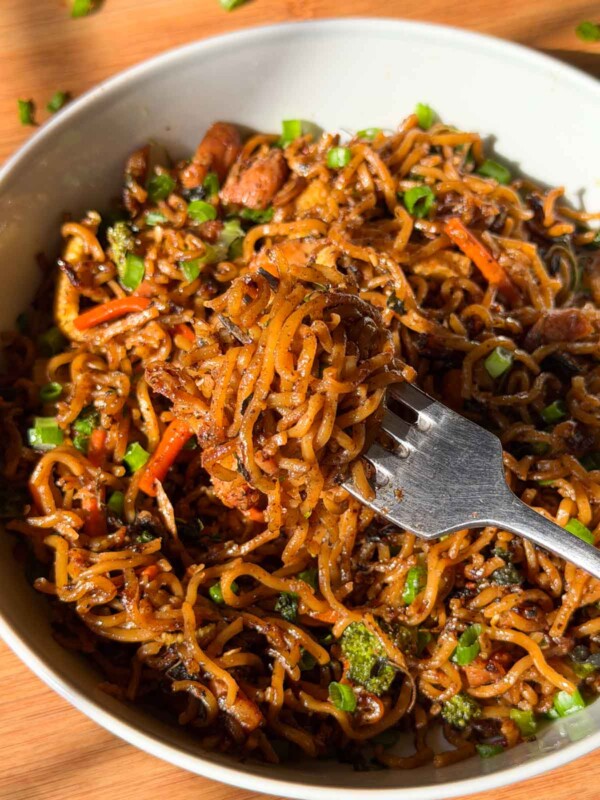
This one-pot peanut butter ramen was made for you if your idea of a perfect evening involves a warm bowl of noodles and not too many dishes to wash.
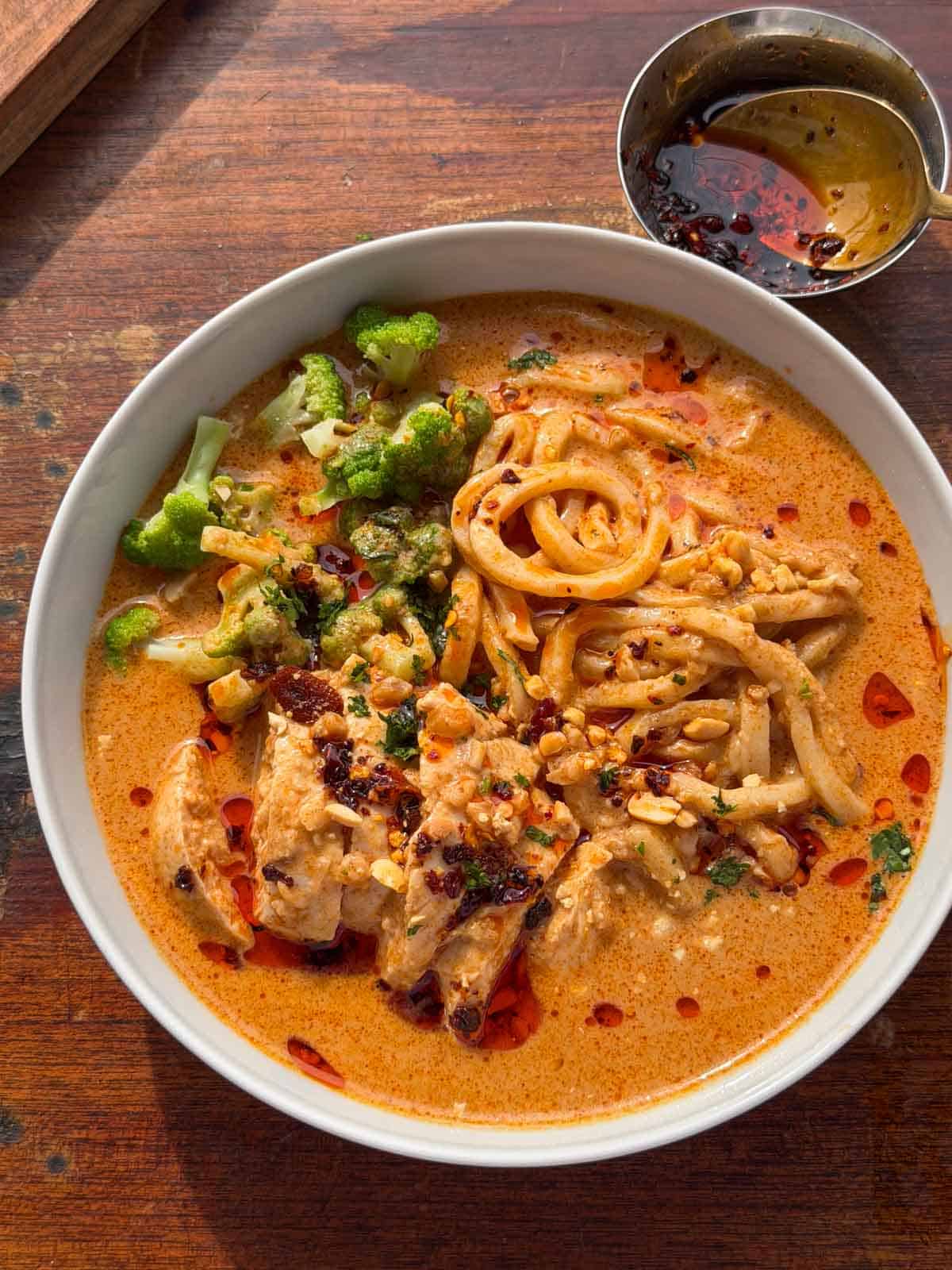
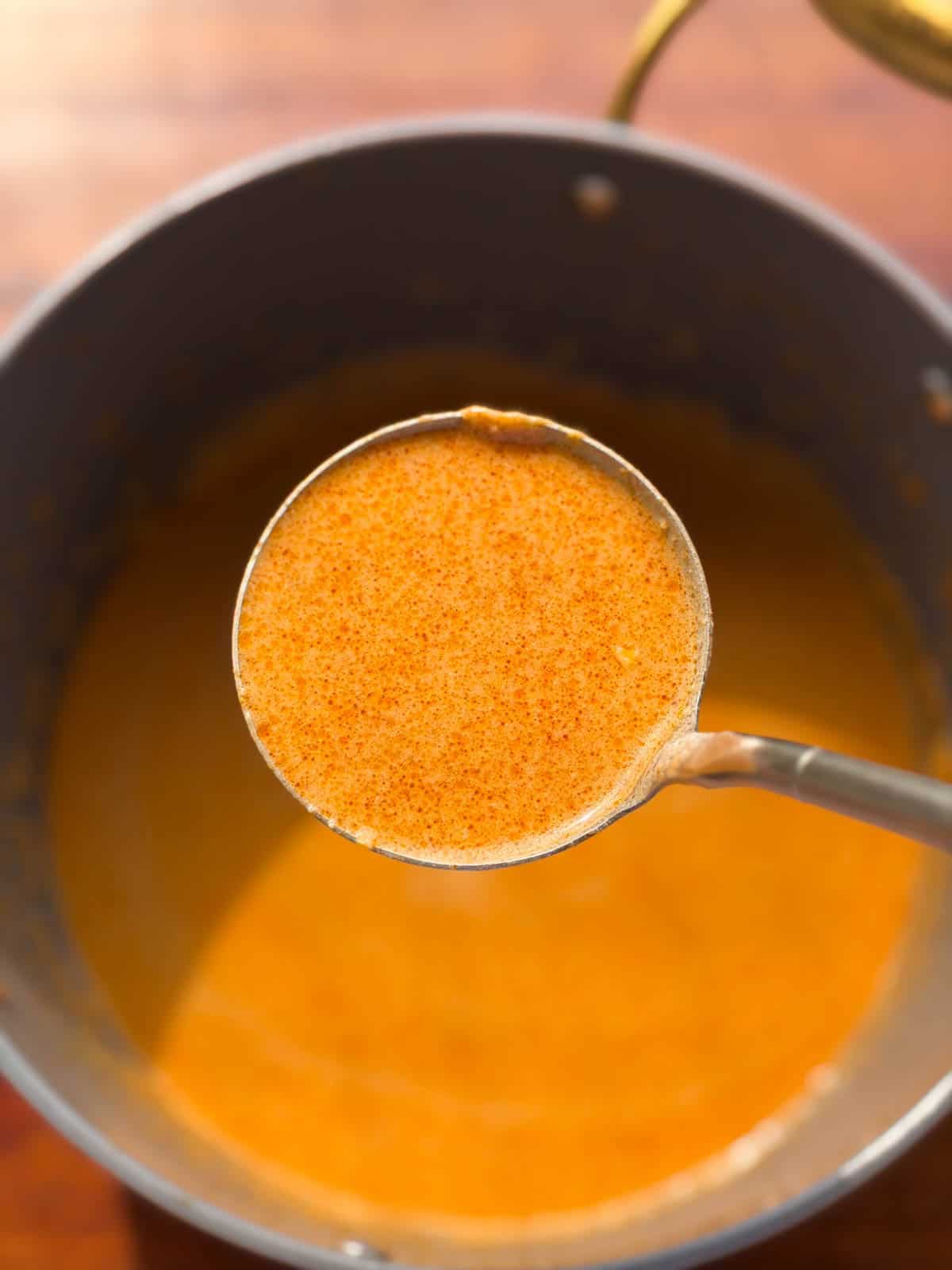
This one-pot peanut butter ramen has been saving our weeknight dinners for a while now. The broth is creamy and nutty from the peanut butter, warm from the Thai curry paste, and because the chicken and noodles cook right in it, every bite is packed with flavour. It takes about forty minutes, and there’s literally one pot to clean after.
We usually top each bowl with some blanched broccoli, crushed peanuts, and a drizzle of homemade chilli oil, which honestly takes it to another level. Fair warning, once you make this, regular instant noodles are never going to feel the same again.
Jump to section: peanut butter ramen noodles
Ingredients for Peanut Butter Ramen Noodles
Chicken Breast: Boneless. It poaches right in the broth and gets sliced before serving
Peanut Butter: The base of the broth. It gives it that creamy, nutty richness
Red Thai Curry Paste: For warmth and spice. Adjust the amount depending on how much heat you like
Coconut Milk: Adds creaminess and rounds out the broth beautifully
Chicken Stock: I’ve used homemade, but store-bought works too. You can also use plain water in a pinch
Udon Noodles: Cooked udon works best here. They’re thick, chewy, and hold up really well in the broth
Garlic: Finely chopped and sautéed right at the start
Seasoning: Soy sauce, salt, and sugar to balance everything out
Toppings: Blanched broccoli florets, crushed roasted groundnuts, and homemade chilli oil to finish each bowl
Oil: Groundnut or any neutral cooking oil.
Frequently Asked Questions
Cashew butter or almond butter both work, though the flavour will be milder. Peanut butter gives the strongest, nuttiest flavour and pairs best with the Thai curry paste. Avoid chunky varieties as they won’t blend smoothly into the broth.
Yes. Skip the chicken and use vegetable stock instead of chicken stock. Add firm tofu or extra vegetables like mushrooms, baby corn, and bok choy. The peanut butter broth is flavourful enough to carry the dish without any meat.
Egg noodles, ramen noodles, or rice noodles all work. Just adjust the cooking time based on the type you use, since they all cook differently. Udon is recommended because it’s thick, chewy, and holds up well in the broth without turning soft.
Richa’s Top Tips
- Poach the chicken in the broth, don’t cook it separately. The chicken absorbs all the flavour from the peanut butter and curry paste broth while it cooks, and it also adds its own richness back into the broth. Win-win.
- Remove the chicken before adding the noodles. This way the chicken doesn’t overcook while the noodles are in the pot. Let it rest and cool slightly before slicing into thin strips.
- Don’t overcook the noodles in the broth. 3-4 minutes is enough. They’ll continue to absorb liquid even after you take them out, so pulling them slightly early keeps them from getting mushy.
- Optionally add: I sometimes add in a small spoonful of miso paste for an extra layer of savoury depth to the broth.
Storage Tips
- In the fridge: Store the broth, chicken, and noodles separately in airtight containers for up to 2 days. The noodles absorb liquid as they sit, so keeping them apart prevents them from turning bloated and mushy.
- Freezing: The broth freezes well on its own for up to two weeks. The cooked noodles and chicken are best made fresh as both lose their texture once frozen and thawed.
- Reheating tip: Warm the broth on the stove, reheat the chicken in a pan or microwave, and run the noodles under hot water to loosen them up before assembling the bowl fresh. It’ll taste almost as good as the first time.
Serving Ideas
This peanut butter ramen is a full meal in a bowl, but if you want to add something on the side, you can serve it:
- With Vegetarian Gyoza Potstickers: A few crispy gyoza alongside a bowl of ramen makes for a very tasty classic combination.
- With Veg Spring Rolls: Crispy spring rolls and a warm bowl of ramen make for a proper Asian dinner spread.
- With Egg Fried Rice: If you want to stretch the meal for more people, a side of egg fried rice rounds things out nicely.
Did You Know?
Peanut butter was originally invented as a protein source for people who couldn’t chew meat. In 1895, a doctor named John Harvey Kellogg (yes, the cereal guy) patented a process for making peanut paste for his elderly patients who had no teeth. It went from a medical food to one of the most consumed spreads in the world within a few decades.
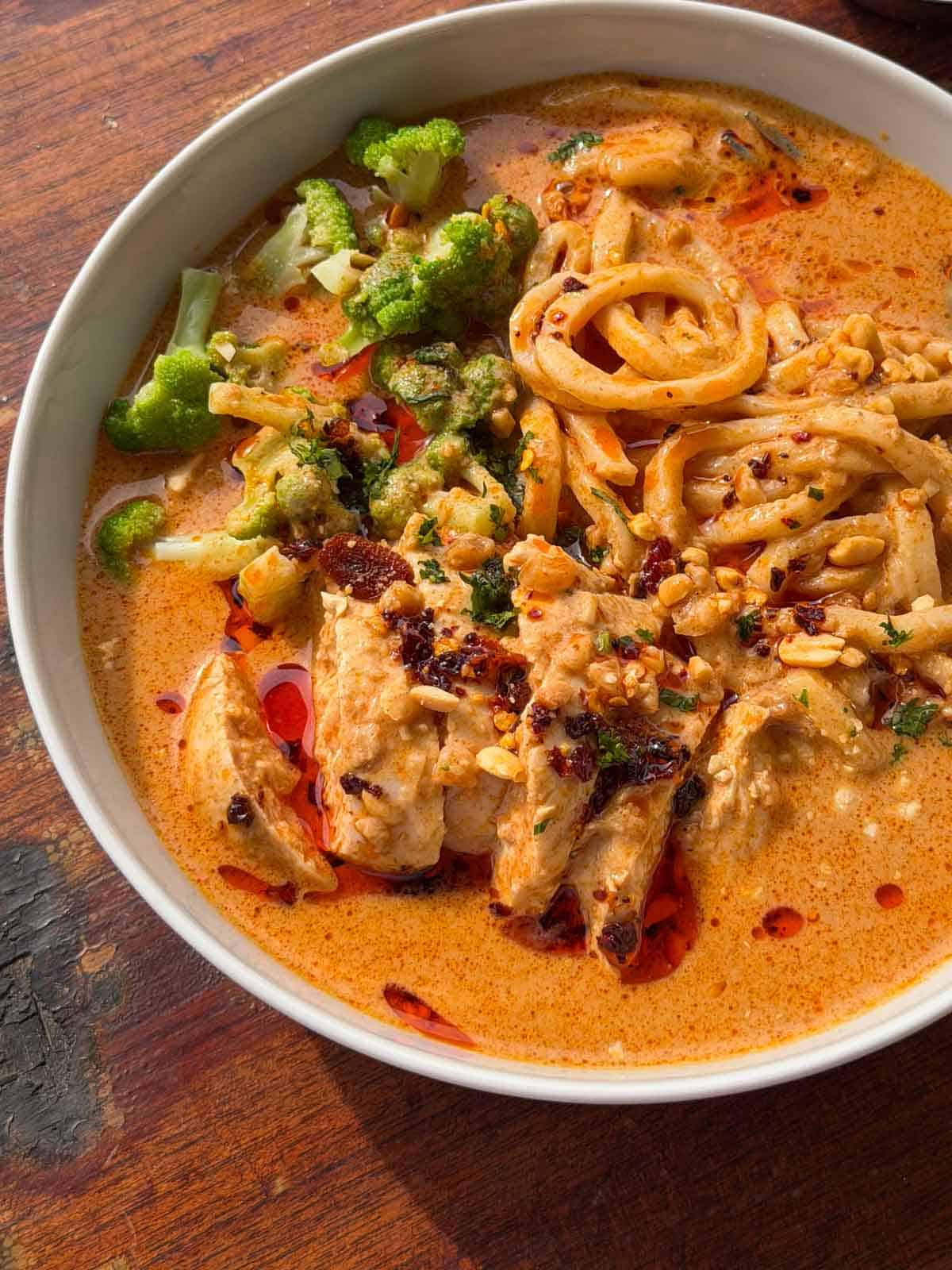
A warm bowl of noodles at the end of a long day can fix a lot of things, and I hope it finds a place in your kitchen & heart too. Share your bowls with me on Instagram @my_foodstory whenever you make them. I’d love to see how yours turns out.
Watch Peanut Butter Ramen Noodles Recipe Video
Peanut Butter Ramen Noodles
Ingredients
- 1 tablespoon groundnut or any neutral cooking oil
- 100 grams boneless chicken breast
- 2 teaspoons finely chopped garlic
- 3 tablespoons peanut butter
- 3 tablespoons red thai curry paste
- 1 teaspoon soy sauce
- ½ teaspoon salt, refer note 1
- 1 teaspoon sugar
- 2 ½ cups chicken stock or water
- 200 grams cooked udon noddles
- 200 ml coconut milk
- ½ cup blanched broccoli florets
- 2 tablespoons roasted, peeled & crushed groundnuts
- 2 tablespoons chilli oil
Instructions
- Heat oil in a pot or pan, add chopped garlic and saute for a few seconds till they get fragrant.1 tablespoon groundnut or any neutral cooking oil, 2 teaspoons finely chopped garlic
- Add peanut butter, curry paste, soy sauce, salt, sugar and saute for a few seconds.3 tablespoons peanut butter, 3 tablespoons red thai curry paste, 1 teaspoon soy sauce, ½ teaspoon salt, 1 teaspoon sugar
- Add chicken stock and cook for 5 minutes so the stock absorbs all the flavours.2 ½ cups chicken stock or water
- Add chicken breast and cook for 10-12 minutes till the chicken is cooked well. Remove the chicken from the broth and transfer to a plate. Once its cooled, slice into thin strips.100 grams boneless chicken breast
- Add noodles to the pot and cook for 3-4 minutes. Using a slotted spoon or tongs, separate the noodles from the broth and set aside.200 grams cooked udon noddles
- Whisk in coconut milk and stir until combined.200 ml coconut milk
- Take a serving bowl, add 1 cup of noodles,some chicken strips, broccoli, 2-3 ladles of the broth, 2 teaspoons of crushed groundnuts, top with 1-2 teaspoons of chilli oil and serve hot.½ cup blanched broccoli florets, 2 tablespoons roasted, 2 tablespoons chilli oil
- Repeat the same for rest of the servings.
Video
Notes
- My home made chicken stock was moderately salty & hence i used ½ teaspoon of salt. So the salt proportion depends on the saltiness of chicken stock & soy sauce you are using and hence you may need to increase or decrease the quantity accordingly.
Nutrition
This article was researched and written by Harita Odedra.


I made a few adjustments with my recipe like doubling the coconut milk and noodles, and swapping the chicken for fish. It was quick, easy, and soo good.