The Best Veg Biryani | Vegetable Biryani Recipe

on Jan 19, 2022, Updated Aug 10, 2022
This post may contain affiliate links. Please read our disclosure policy.
Try this recipe to make the best veg biryani at home! I’ve included my top tips and tricks to make this just as delicious as the meat version, and achieve the same restaurant-style taste!
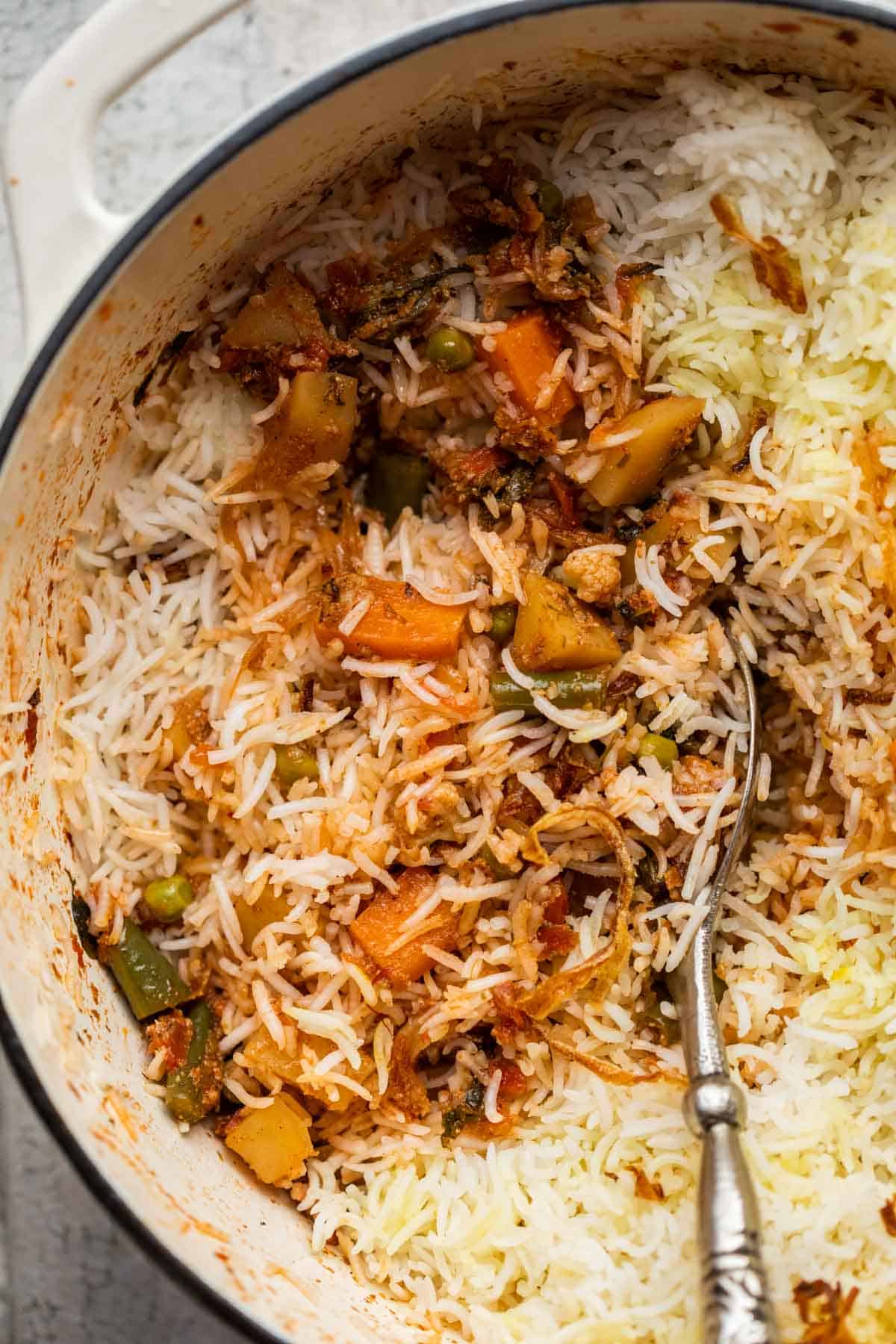
Okayyyyy, I can hear some of you all the way till here – “There’s no such thing as veg biryani Richa!” Hahaha.. I thought so too because we’re big fans of our Homemade Chicken Biryani and there’s never been a question of making Veg Biryani… Like, pfftt. You mean pulao?
That’s what I thought too! But then this recipe is not pulao. It qualifies as a legit biryani. It’s a steamy pot full of aromatic biryani packed with masala and your favourite veggies. Trust me you need to try this!
In fact, I was so inspired by the success of this Veg Biryani that I also have a Makhani Paneer Biryani for you to try. And if you’re making biryani for the first time, I highly recommend my 19 Tips to make the Best Biryani Ever! to make sure you nail it in the first go!
jump to section: Veg biryani
Difference Between Biryani and Pulao
Pulao qualifies as any dish where the rice and other ingredients are all cooked together. Biryanis on the other hand are made by cooking rice and meat or veggies separately and then layering them – which is why this requires more skill than pulao.
The Right Rice for Biryani
I think you can excuse people for using any kind of rice for pulao, but a Hyderabadi style biryani demands basmati rice. Good quality basmati has long grains of rice, is aged and so aromatic. You might see many brands of rice labeled ‘long grain rice’, but make sure to look for ‘basmati’. Basmati has long grains but every rice with long grains is not basmati.
Cooking Rice for Biryani
Rice for biryani is always cooked in two parts. First we boil it until partially cooked, and then we layer it with veggies (or meat) before steaming till it’s fully cooked. This helps infuse the rice with flavour and aroma from the vegetables (or meat).

- Add the rice grains to a pot of boiling water with salt and a dash of oil; drain off this water when the rice is about 85% cooked (see timings in the recipe card below). When you break a grain of rice, you should still feel a bite/some rawness
- Soak the rice half an hour before cooking. The grains soak up water and this helps speed up the cooking process
- It’s important not to stir the rice too much to prevent the grains from breaking. The mark of a good biryani is when the grains of rice are fully cooked, intact (not mushy) and separate (not sticky).
These steps ensure that the rice is cooked without getting mushy, and also takes on the flavours of the masala and veggies.
Soaking Saffron
Saffron adds a distinct aroma and flavour to biryani and gives the grains that unique orange tint that looks beautiful when the whites and oranges of rice mingle together.
Soak the saffron in hot milk while you make the biryani masala in the next step. Saffron will take 10-15 minutes to release its aroma and colour so set it aside while you make the masala.

Making the Vegetable Biryani Masala
True to its name, my vegetable biryani has mixed vegetables that we love like onions, cauliflower, peas, carrots, potatoes and french beans. These are standard biryani/pulao veggies and taste really good. You could also add:
- Cubes of paneer (add along with veggies)
- Soya chunks (soak beforehand separately for about 15 mins, squeeze out the water, and add them along with veggies)

5. Saute whole spices in ghee till they are fragrant
6. Saute sliced onions till they are brown and add ginger garlic paste. Cook the ginger garlic paste for a few minutes
7. Add all the veggies along with mint and coriander and roast for a few minutes. Add coriander powder, chilli powder, salt and stir fry again.
8. Add tomatoes and mix and cover and cook for 15-20 minutes or until the vegetables are fully cooked (stir occasionally). You should see the oil separating around the edges. Add a little water if you feel like the masala is sticking.
Here’s how to prep your veggies – Make sure you cut the veggies approximately in the same size and shape. This is because each veggie has its own cooking time and will cook unevenly if not cut in similar shapes and sizes.
Layering the Biryani
Layering the biryani is pretty straightforward once the veggies are cooked. You can chose to create 4 layers, alternating between cooked veggies and rice or like I do – just one layer with rice on top of the veggies. Finish it with ghee and saffron for both flavour and aroma.

9. The final step in making the biryani masala is to add yoghurt and garam masala to the cooked veggies and keep stir-frying for 2-3 minutes till the yoghurt completely disappears.
10. Add all the parboiled rice on top, gently making an even layer.
11. Drizzle saffron milk and ghee on top.
12. Cover and cook for 15 minutes on a low flame. If you don’t have a heavy-bottomed pot, keep your pot on a tava or skillet with the flame on. This prevents the bottom from burning.
Richa’s Top Tips
Guys, I’ve jotted down some important pointers for you; make sure you look these up as and when you’re making the biryani – THESE MAKE ALL THE DIFFERENCE.
- Use a heavy bottomed pan to make sure the heat everything cooks evenly and the biryani doesn’t stick to the bottom.
- You can lightly crush the spices and herbs just to cajole the aroma out of them.
- Roast the spices until they’re toasted and not burnt, because that’ll leave a bitter after taste.
- Don’t underestimate the power of the common mint and coriander leaf, as they are key in delivering the restaurant-style taste.
- Make sure to cut the veggies to the same size to help them cook evenly.
- Well-roasted veggies will lap up the flavours of the spices.
- Soak the rice half an hour before cooking to help speed up the cooking process.
- Make sure not to stir the basmati while it boils. Stirring might break up the grains
- The final touches of saffron milk and LOADS of ghee amp up the flavours of this veg biryani! Don’t skimp on the oil and ghee – Fat is essential in making sure the biryani is cooked well and tastes great
Be very generous with the ghee guys, it’s an age-old trick to making amazing food. And if you’re up to it someday, try making ghee at home with this recipe!
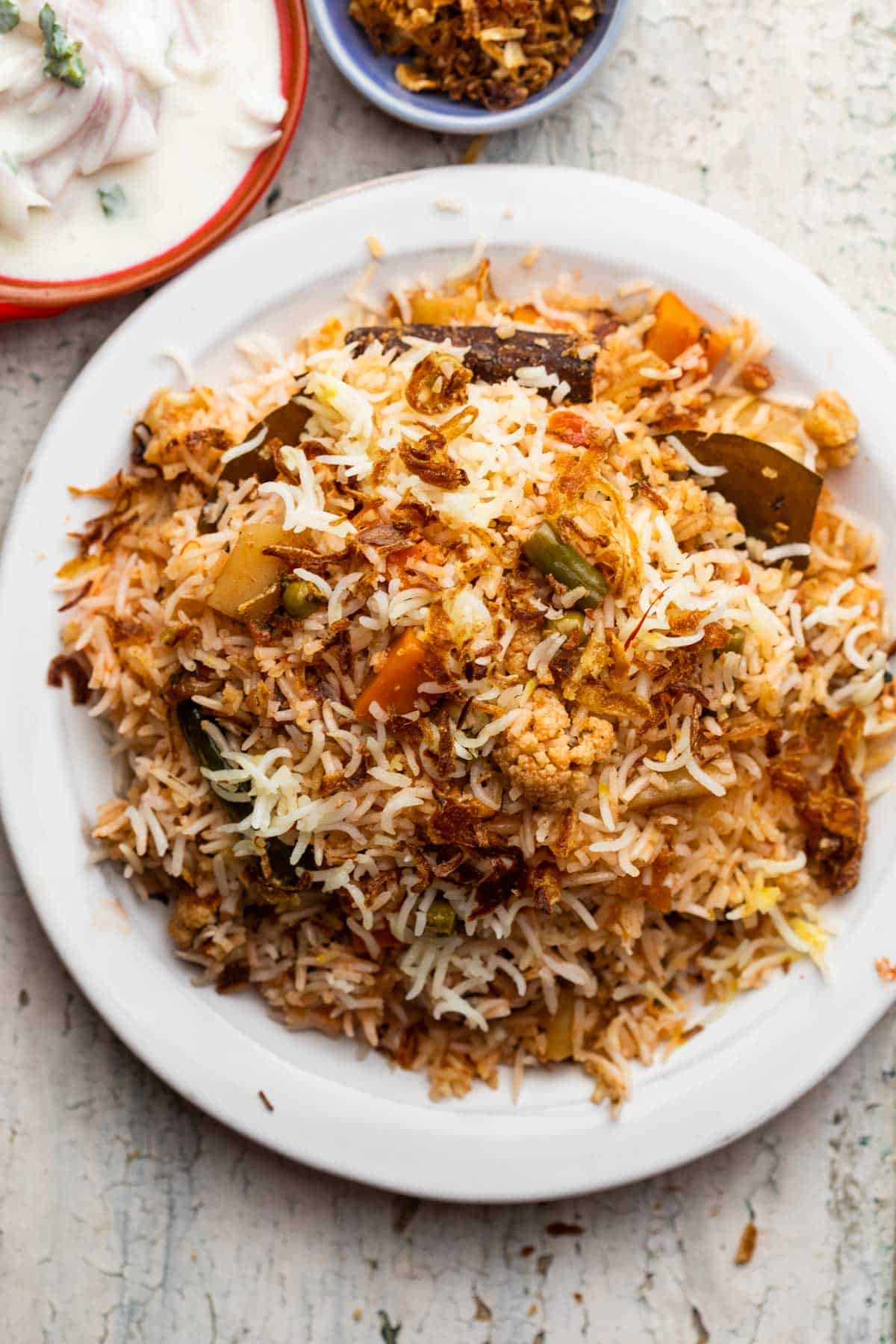
If you are vegan, here are some substitutes so that you can turn this into vegan biryani. It tastes just as good:
- Substitute ghee with vegan butter
- Replace the raita with a non-dairy yoghurt made of almond milk
- Soak the saffron in a non-dairy milk substitute
Serve this vegetable biryani with
This recipe has precise cook times and instructions as to when to add what. Trust me, I’m a huge meat lover but this veg biryani has been a game changer!
Watch the Recipe Video
LOVE THIS RECIPE? Subscribe to my newsletter and be the first to receive all new recipes!

Restaurant Style Veg Biryani
Ingredients
Rice
- 400 Grams Long Grained Basmati Rice, 2 Cups
- 6 Cups Water
- ½ Tablespoon Salt
- ½ Tablespoon Oil
Saffron Milk
- 2 Tablespoons Milk, hot
- 10-12 Strands Saffron, crushed
Biryani Masala
- ¼ Cup Vegetable Oil
- ½ inch Cinnamon
- 1 Bay Leaf
- 3 Green Cardamoms
- 3 Cloves
- 1 Onion, Thinly Sliced, approx ¾ Cup
- 2-3 Green Chillies, slit lengthwise
- 1 ½ Tablespoon Ginger Garlic Paste
- 2 Tomatoes, chopped, approx ¾ Cup
- 300 Grams Mixed Vegetables, I used Cauliflower, Peas, Carrots, Potatoes, French Beans
- ½ Cup freshly Chopped Coriander
- ½ Cup freshly Chopped Mint Leaves
- 2 Teaspoons Coriander Powder
- 2 Teaspoons Chilli Powder
- ¾ Teaspoon Garam Masala
- ¾ Cup Curd or Greek Yoghurt
- 1 ½ Teaspoon Salt
Assembly
- 2 Teaspoons Ghee
Instructions
Rice
- Wash and rinse the rice to get rid of excess starch. Soak the rice for 30 minutes.
- Bring water to a roaring boil in a large stockpot. Add the soaked basmati rice, salt and oil. Mix to combine.
- Cook for 7-8 minutes or until the rice is 85% cooked on medium flame. Drain the water once done and keep the rice aside.
Saffron Milk
- Soak saffron strands in hot milk for 10-15 minutes.
Biryani Masala
- In a big heavy bottomed pan or kadai, heat oil on a medium flame. Once hot, add cinnamon, cardamom, cloves and bay leaf. Fry for 30 seconds or until fragrant.
- Add the sliced onions and fry for 3-4 minutes or until golden brown. Add green chillies and ginger garlic paste and saute for another minute.
- Add the vegetables, coriander and mint leaves and roast for 2-3 minutes.
- Add the chopped tomatoes, coriander powder, chili powder and salt and cook for 15-20 minutes or until the vegetables are fully cooked. You should see the oil separating around the edges. You may add a little water if you feel the masala is sticking to the bottom.
- Reduce the flame and add yogurt and garam masala to the cooked veggies and keep stir frying for 2-3 minutes till the yogurt completely disappears.
Assembly
- Add the par cooked rice on top of the cooked vegetable masala and tuck it at a few places into the masala underneath. Spread out the remaining rice to cover the pot completely.
- Drizzle the saffron milk and ghee over the rice.
- Cover the pot with a lid and leave the Biryani to cook on dum for about 15-20 mins. or until the rice is done.
- Drizzle with fried onions and serve hot
Video
Notes
- While buying basmati rice, make sure you buy rice that’s labelled basmati and not just long grain rice. Basmati Rice is fragrant and has slightly thinner grains than long grain rice. Real basmati rice is what gives biryani its distinct flavor and taste.
- Using a heavy-bottomed pan distributes heat evenly (vis-a-vis the thin bottomed cooking pans). Therefore, it cooks evenly and prevents the biryani from sticking to the bottom.
- Make sure the spices are toasted but don’t burn, because that’ll leave a bitter taste
- Don’t underestimate the power of the common mint and coriander leaf, they’re the magicians in this recipe for that restaurant-style taste and key to this recipe
- Make sure to cut the veggies to the same size. This ensures they will cook evenly
- Soak the rice half an hour before cooking. The grains soak up water and this helps speed up the cooking process
- Make sure not to stir the basmati while it boils. Stirring might break up the grains
- The final touches of saffron milk and LOADS of ghee amp up the flavours of this veg biryani! Don’t skimp on the oil and ghee – Fat is essential in making sure the biryani is cooked well and tastes great
- In the last step of layering and cooking the biryani, all the ingredients are par cooked. Cooking the biryani on a low flame for 15 minutes, steams and cooks everything to doneness. If you don’t have a heavy-bottomed pot, and are using a regular pot, you can place it on a tava (or flat griddle) and then place it on the stove on a medium flame to avoid burning the veggies at the bottom. The tava or griddle creates a degree of separation between the flame and the pot and provides the perfect heat source.
- Substitute ghee and milk with vegan replacements like vegetable oil or almond milk.




Hi Richa,
Just wondering because you say 400g of rice in the recipe but in one of your comments you say 1KG, which one is correct/did you update the recipe?
thanks
Hey Ricardo, this recipe works best for 400g of rice.