Easy Misal Pav Recipe

on Jan 10, 2022, Updated Jan 17, 2022
This post may contain affiliate links. Please read our disclosure policy.
Misal Pav is a popular Maharashtrian street food dish. Toasted, buttery pav bread rolls meet the complex, spicy, and garlicky misal – making this dish a party of flavours and textures. Misal Pav is generally served as breakfast or evening snack, but with all its components, it’s really nutritious and can work well as a meal too!
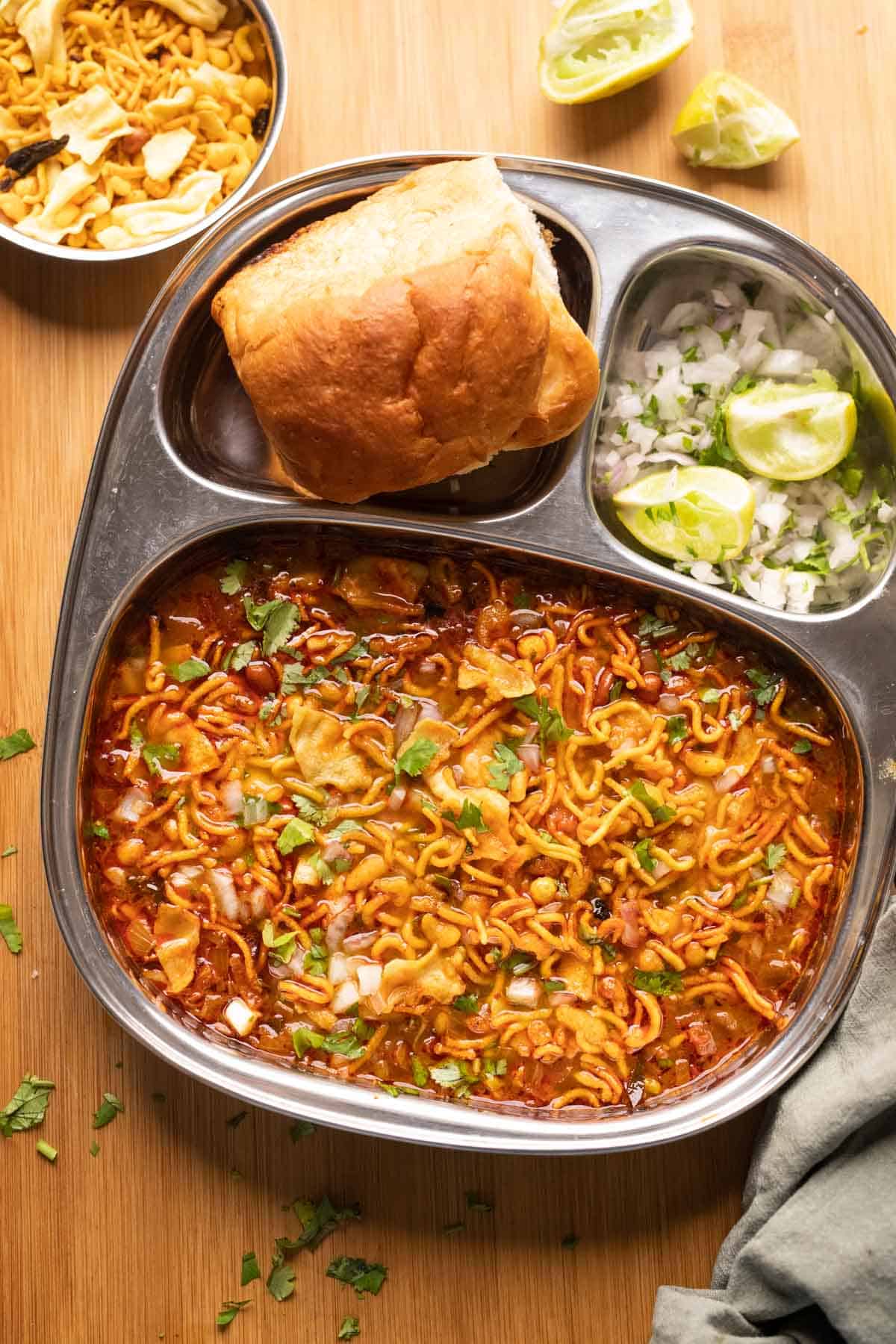
There’s just something about starting your day off with a steamy plate of misal pav on the streets of Mumbai. So whenever I am not in the city, I find myself craving that authentic, Maharashtrian street-style taste.
I finally had to make misal pav at home, and now, this recipe is a family favourite! I’ve used ready made misal masala to bring out those street food flavours that we love.
Misal is traditionally made with matki (moth beans) but I like to use a mix of sprouted lentils and beans to add more nutrition and make it easier to digest.
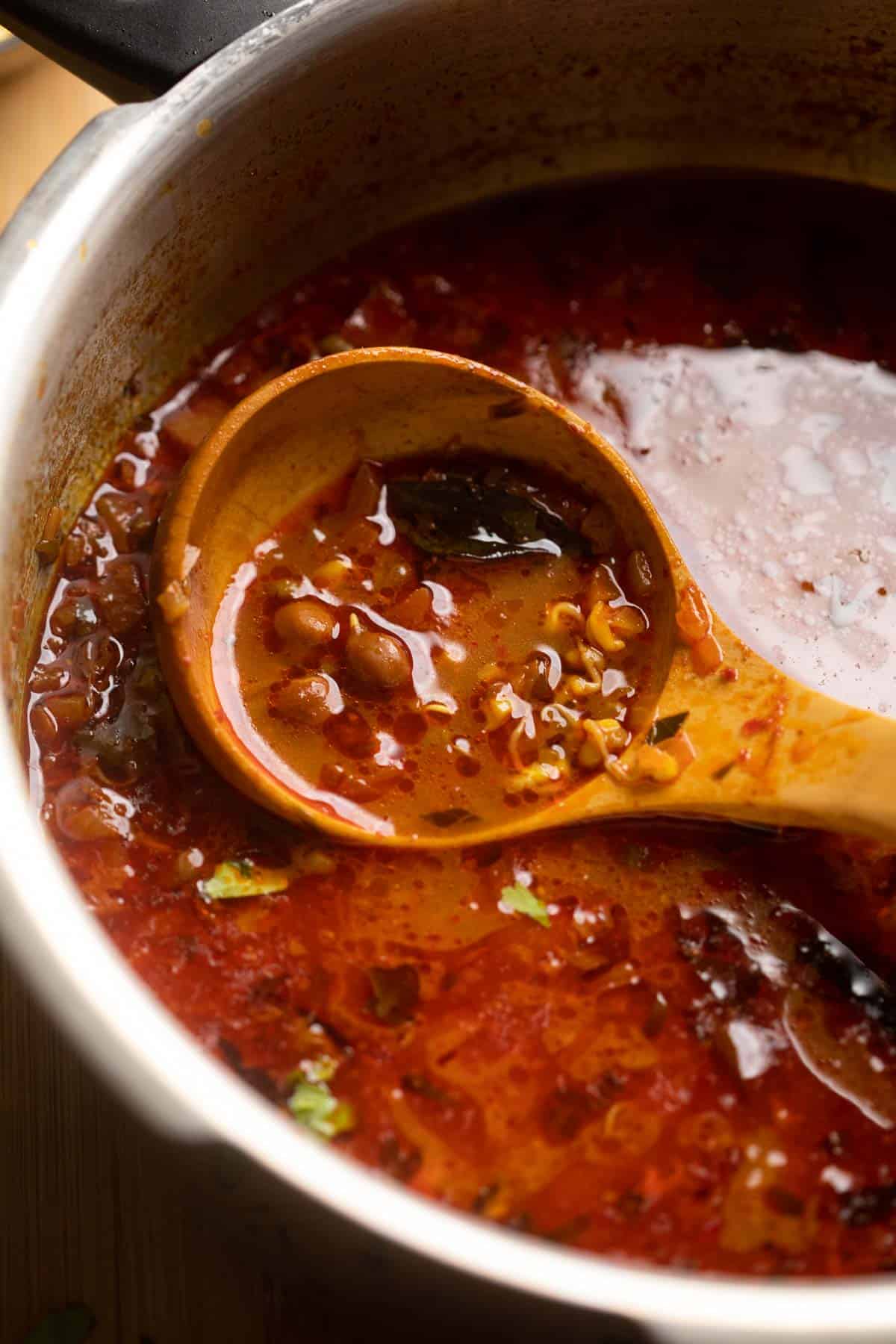
Misal itself has two parts – usal, a thick curry made with matki, and rassa, a thinner gravy, which you can mix together to suit your tastes. The rassa usually has a fair amount of oil but the amount that you finally use is totally up to you.
Quick and Easy Misal Recipe
We prepare the misal in the pressure cooker, so the cooking time is quick – making it a great breakfast option for the family to enjoy together. Trust me, even kids (who can handle the heat) love this one!
- This recipe is easy but with authentic street-style flavours that actually come out of a packet aka misal masala
- Save time by buying a packet of ready sprouts which are so easily available these days
- It is rich in fibre and vitamin C
- It has a quick cook time
Ingredients for Misal Pav
Here are the main ingredients you’ll need for this recipe:
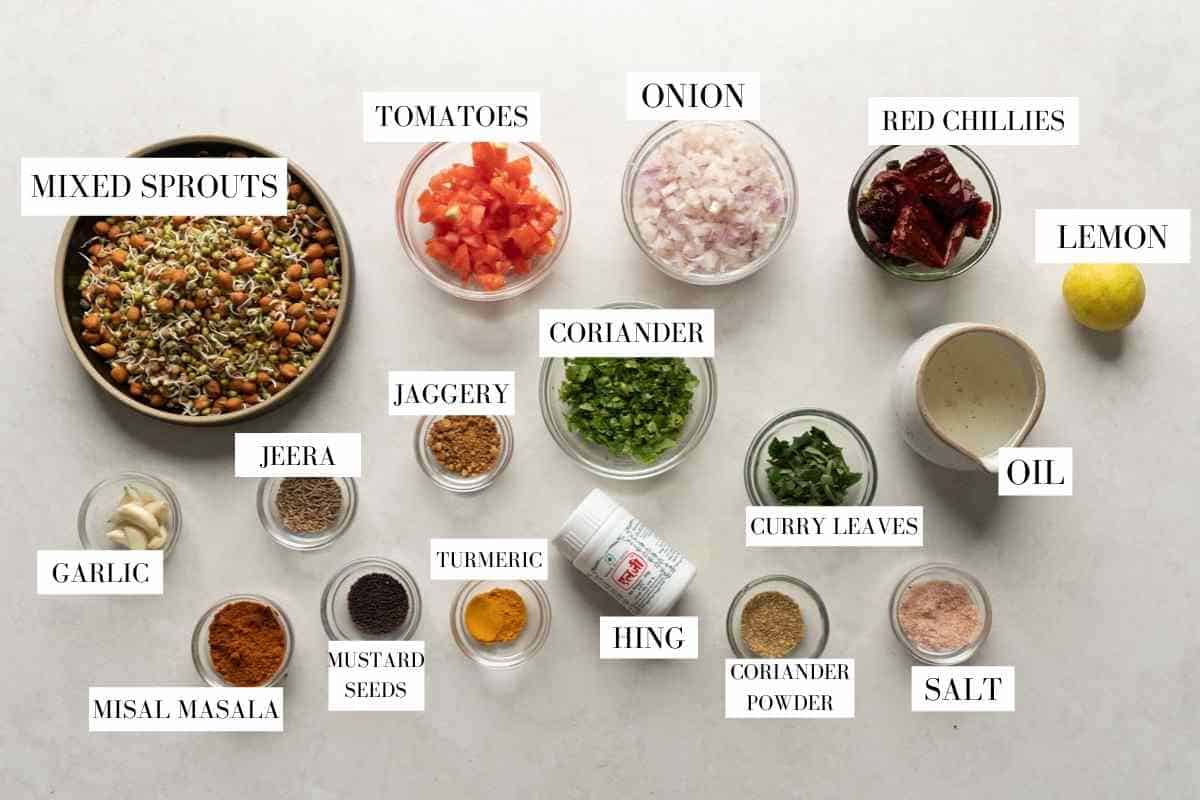
- Chopped Tomatoes and Onions: These create the base for the dish and we build the flavours by adding the seasonings.
- Mixed Sprouts: You can use any sprouts or a combination of sprouts for the misal. I have used sprouted moong (green gram), chawli (cow peas), and matki (moth beans). Misal is traditionally made using matki, but using mixed sprouts adds varying textures to the misal which makes for a great bite!
- Dried Red Chillies: We use a combination of Byadgi and Kashmiri Red Chillies to prepare the chilli paste for this recipe, for that vibrant red colour and heat.
- Misal Masala: I use ready made Misal Masala and here’s the brand I like – Madhura’s Misal Masala . In a pinch, you can also use goda masala or pav bhaji masala.
How to make Misal
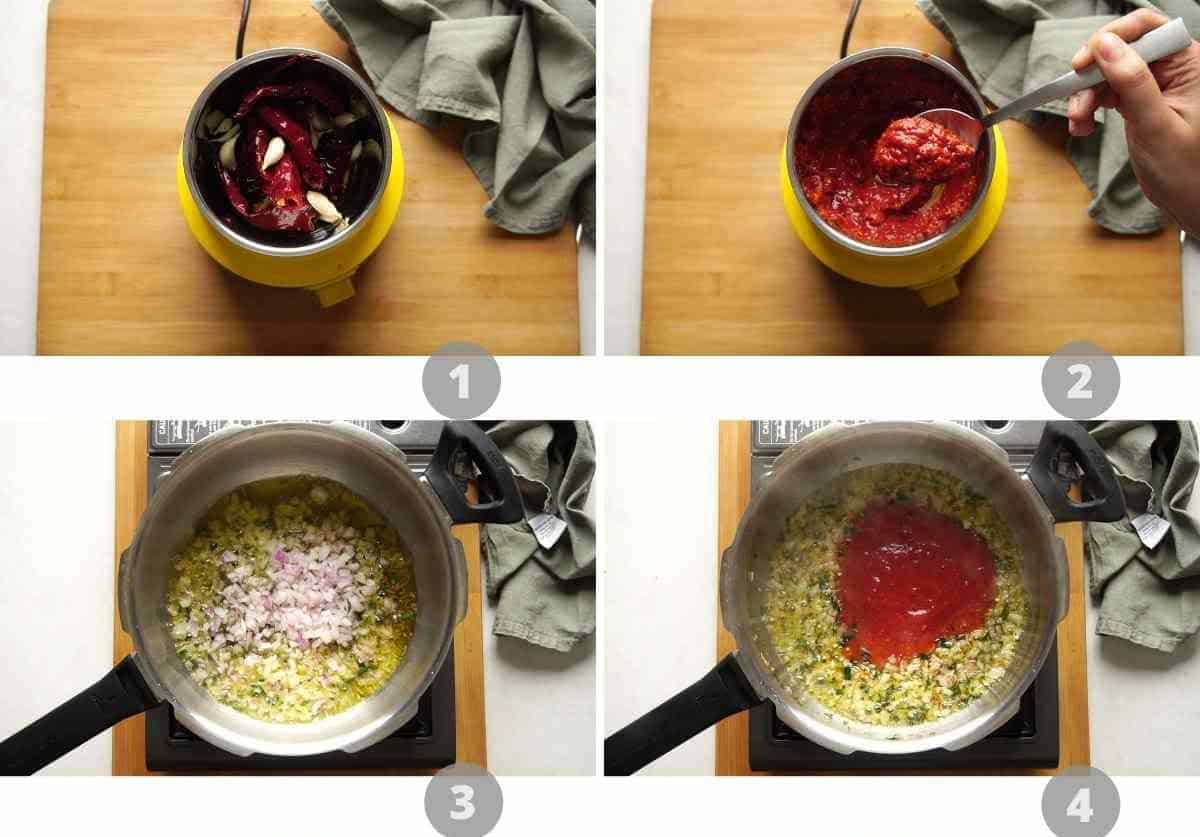
1. Soak dried red chillies in hot water for 15-20 minutes. Drain any water and add the soaked chillies to a mixer grinder with garlic
2. Grind to a smooth paste and set aside
3. Heat oil in a pressure cooker over high heat. Once hot add mustard seeds and allow them to splutter. Reduce heat to medium and add cumin seeds, hing and curry leaves. Fry for 30 seconds. Add chopped onions and saute for 1 minute or until fragrant.
4. Add the red chilli paste and fry until the raw aroma goes; approximately 2-3 minutes.
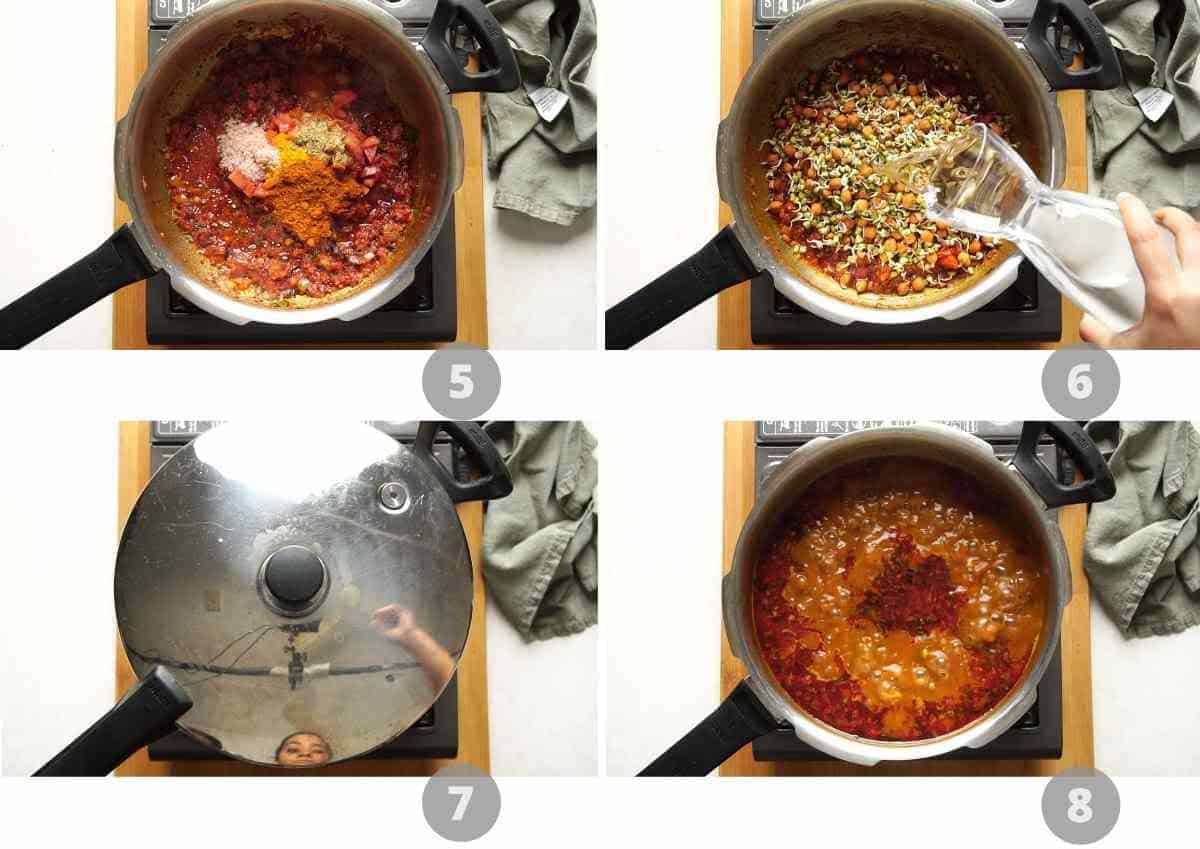
5. Add chopped tomatoes and misal masala and stir to combine. Cook for 3-4 minutes or until the tomatoes have softened and the oil separates.
6. Add mixed sprouts and mix to combine. Add water and salt and stir until well mixed.
7. Cover the lid of the pressure cooker and seal with the whistle. Cook on high heat till the 1st whistle and then reduce the flame to low and cook for another 10 minutes. Once done, turn off the flame and allow the pressure to release naturally.
8. Remove the whistle and lid of the pressure cooker. Turn on the flame to a medium, add jaggery and mix to combine. Bring it to a boil and turn off the flame. Sprinkle with chopped coriander leaves and some freshly squeezed lemon juice. Stir to combine. Serve hot along with some pav or poha, chopped onion and top it off with some farsaan!
Serving Misal
Here are some popular serving suggestions for Misal
Pav: Buttery pav bread rolls are the famous pairing with misal.
Poha: Another great pairing with misal is some fresh poha! The poha soaks up the rassa and the combination is world class!
Chopped Onions: Some chopped raw onions, coriander, and a squeeze of lemon juice garnish on the misal really take the dish to another level.
Farsaan: Crunchy farsaan, or salty Indian snacks such as Chivda, are great toppings for misal pav because they add more texture to the dish. You can also add sev as a topping if you don’t have access to misal farsaan
FAQ:
Is misal pav healthy? Since misal is made using mixed sprouts, it is a great source of protein and fibre – making the dish quite nutritious. You can always serve the misal with poha instead of pav to make the meal healthier, especially if you plan to add this to your breakfast rotation.
What are the varieties of misal pav? Different regions in Maharashtra have their own preparations of misal, for example Nashik misal is often served with pav and curd, but Puneri misal in is served with poha. Kohlapuri misal is served with bread instead of pav – which is a great way to enjoy misal with pantry staples.
TOP TIPS:
- Don’t reduce the water in the recipe because you need it for the rassa
- Top the misal with farsan only once you are ready to serve or the farsaan will get soggy
- Substitutes for Misal Masala: Sub with goda masala or pav bhaji masala for a similar flavour
- Misal is meant to be spicy, but you can reduce the chillies to cut down on the heat
Misal is a dish I just love because there’s so much you can do with it. The way you serve and garnish the dish is totally up to you!
You can even spice up your weekend by hosting a misal station for breakfast – complete with all the fixings (chivda, sev, gathia, papad) – so that each person can help themselves and serve the dish how they like.
Since we are making this recipe at home, you can control the amount of oil and butter you use to keep the nutritional value of the dish high for your family. It’s a win-win! Great flavour, and good for you!
If you’d like to take the dish up a notch, you can serve it with a fresh batch of my Mumbai Ladi Pav – trust me, there is nothing like freshly baked bread rolls and steaming misal!
You can also try out my Pav Bhaji recipe if you love Mumbai street food as much as I do!
Watch the Recipe Video
LOVE THIS RECIPE? Subscribe to my newsletter and be the first to receive all new recipes!

Misal Pav Recipe
Ingredients
Red Chilli Paste
- 3-4 Byadgi Chillies, soaked in hot water for 10 minutes or until soft
- 3-4 Kashmiri Red Chillies, soaked in hot water for 10 minutes or until soft
- 6 Cloves Garlic
Misal
- ¼ Cup Oil, groundnut, sesame, canola oil
- 1 Teaspoon Mustard Seeds
- 1 Teaspoon Cumin Seeds
- ⅛ Teaspoon Hing
- 2 Sprigs chopped Curry Leaves, stem removed
- ¾ Cup chopped Onion, approx 2 onions
- ½ Cup chopped Tomato, approx 1 tomato
- ½ Teaspoon Turmeric Powder
- ½ Teaspoon Coriander Powder
- 1 Tablespoon Misal Masala, sub with goda masala or pav bhaji masala
- 200 Grams Mixed Sprouts
- 3 Cups Water
- 1 ½ Teaspoons Salt
- ¾ Tablespoon Jaggery
- ⅓ Cup chopped Coriander Leaves
- 2-3 Wedges Lemon
Instructions
Red Chilli Paste
- Grind together soaked red chillies and garlic using a food processor or mixer. You can use 1-2 teaspoons of the soaking water. Blend to a coarse wet paste. Keep aside
Misal
- Heat oil in a pressure cooker over high heat. Once hot add mustard seeds and allow to splutter. Reduce heat to medium and add cumin seeds, hing and curry leaves. Fry for 30 seconds.
- Add chopped onions and saute for 1 minute or until fragrant. Add the red chilli paste and fry until the raw aroma goes, approximately 2-3 minutes. Add chopped tomatoes and misal masala and stir to combine. Cook for 3-4 minutes or until the tomatoes have softened and the oil separates.
- Add mixed sprouts and mix to combine. Add water and salt and stir until well mixed. Cover the lid of the pressure cooker and seal with the whistle. Cook on high heat till the 1st whistle and then reduce the flame to low and cook for another 10 minutes. Once done, turn off the flame and allow the pressure to release naturally.
- Remove the whistle and lid of the pressure cooker. Turn on the flame to a medium, add jaggery and mix to combine. Bring it to a boil and turn off the flame.
- Add chopped coriander leaves and some freshly squeezed lemon juice. Stir to combine. Serve hot along with some pav or poha, chopped onion and top it off with some farsaan!
Video
Notes
- Dried Red Chillies: We use a combination of Byadgi and Kashmiri Red Chillies to prepare the chilli paste for this recipe, for that vibrant red colour and heat.
- Misal Masala: I use ready made misal masala. You can buy it on Amazon here. In a pinch, you can also use goda masala or pav bhaji masala.
- Mixed Sprouts: You can use any sprouts or a combination of sprouts for the misal. I have used sprouted moong (green gram), chawli (cow peas), and matki (moth beans). Misal is traditionally made using matki, but using mixed sprouts adds varying textures to the misal which makes for a great bite!
-
Serve it along with:
- Pav: Buttery pav bread rolls are the famous pairing with misal.
- Poha: Another great pairing with misal is some fresh poha! The poha soaks up the rassa and the combination is world class!
- Chopped Onions: Some chopped raw onions, coriander, and a squeeze of lemon juice garnish on the misal really take the dish to another level.
- Farsaan: Crunchy farsaan, or salty Indian snacks such as Chivda, are great toppings for misal pav because they add more texture to the dish. You can also add sev as a topping if you don’t have access to misal farsaan
Nutrition
This article has been researched and written by Navya Khetarpal

Thankyou!! I made it for the first time and loved it. Even YouTube videos make it look so complicated and this was AMAZING!
Yaaaay! Amulya, so so glad you liked the recipe.
Kintaro red chili oil gives food grade natural red colour within seconds. Kintaro is prepared from pure Kashmiri chili infused in the pure sesame oil for a certain duration and then filtered off. Kintaro is the purest and totally unadulterated chili oil. Add Kintaro in any dish to make it RED. Place order for Kintaro red chili oil today and keep it in your kitchen. You may need Kintaro anytime. Kintaro has zero pungency. Kintaro can be enjoyed by everyone. Kintaro never interfere with the original recipe.
your recipe’sare so easy and tasty when made
Thank You!
Nice Post! As the Maxima Kitchen appliances and I like to share some types of Maxima
design cookware.
Very Good
Very helpful content
A lot of the items mentioned are simply not available in my part of the world. Example Misal Masala sub with goda masala or pav bhaji masala. I cannot even get the choice of chillies you use. Such a shame as I love Indian food.
I’m so sorry Diane! I wish I could ship them to you because this is a fantastic recipe
good recepie Thankyou for sharing!