How to cut a Mango – Easy Step by Step Instructions

on Jun 04, 2019, Updated Apr 08, 2024
This post may contain affiliate links. Please read our disclosure policy.
These easy step by step pictures will show you how to cut a mango like a pro! And we have a ton of mango recipes for you to try too!
Mango is called the king of fruits for a reason and who are we to argue? It’s the juiciest, sweetest, most amazing tropical fruit that makes living through hot summer months so much more bearable. We can’t imagine ending a meal these days without biting into a chilled ripe mango with juices dripping down our chin.
However, I know that many of you struggle with cutting a mango, and often end up with a pulpy mess. But don’t worry I am here to help you. In this article, I will show you how to cut a Mango!
Quick Walk Through: How To Cut A Mango
How to cut a Ripe Mango
Method #1: Cutting without peeling
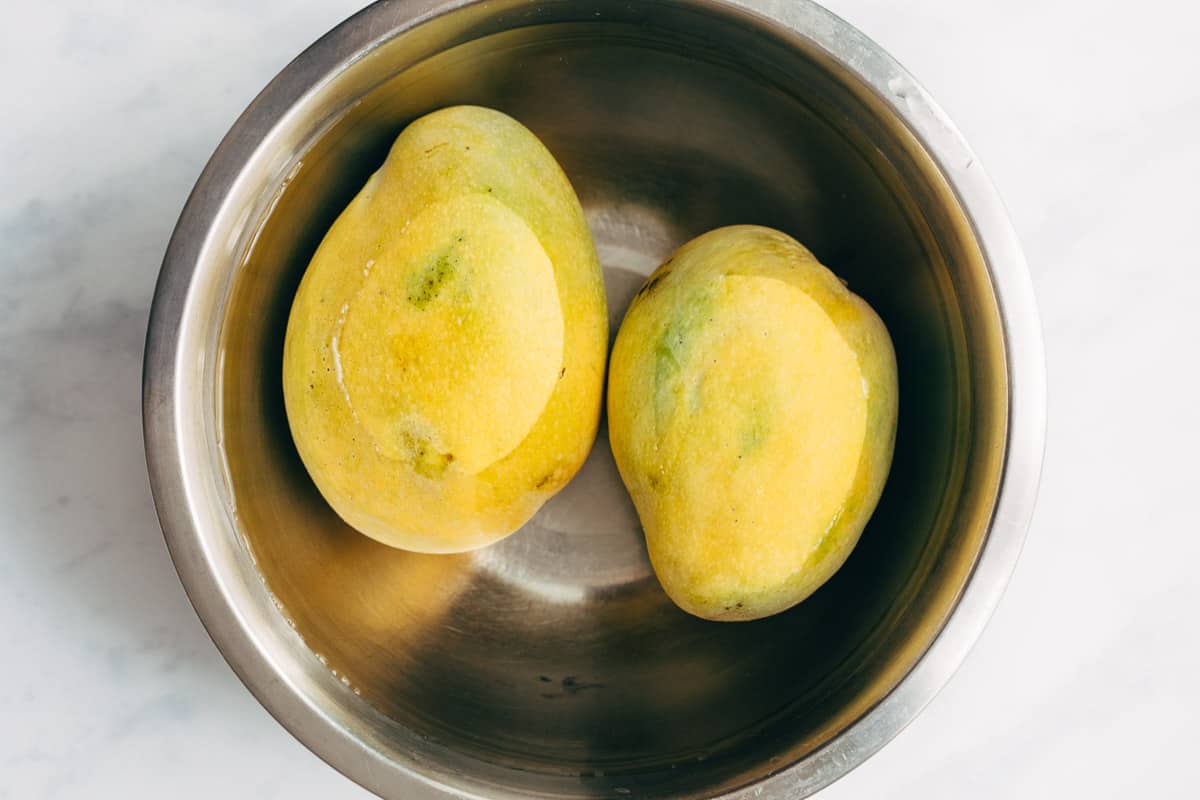
Step 01: Wash the mango well rubbing off all the soil and residue on the skin. It’s also a good idea to soak mangoes in water for 15-30 minutes. Mangoes have a lot of heat, and the soaking process makes them more temperature neutral. Once soaked, remove them from water and refrigerate or cut them to enjoy immediately.
Step 02: Cut a small little circle off around the stem to get rid of it.
Step 03: About half an inch from the stem on either side, slice off 2 fat cheeks. The seed will guide you as you get deeper and the rough fibers will let you know if you are too close to the seed. But again, get as close so you don’t waste any of the juicy fruit.
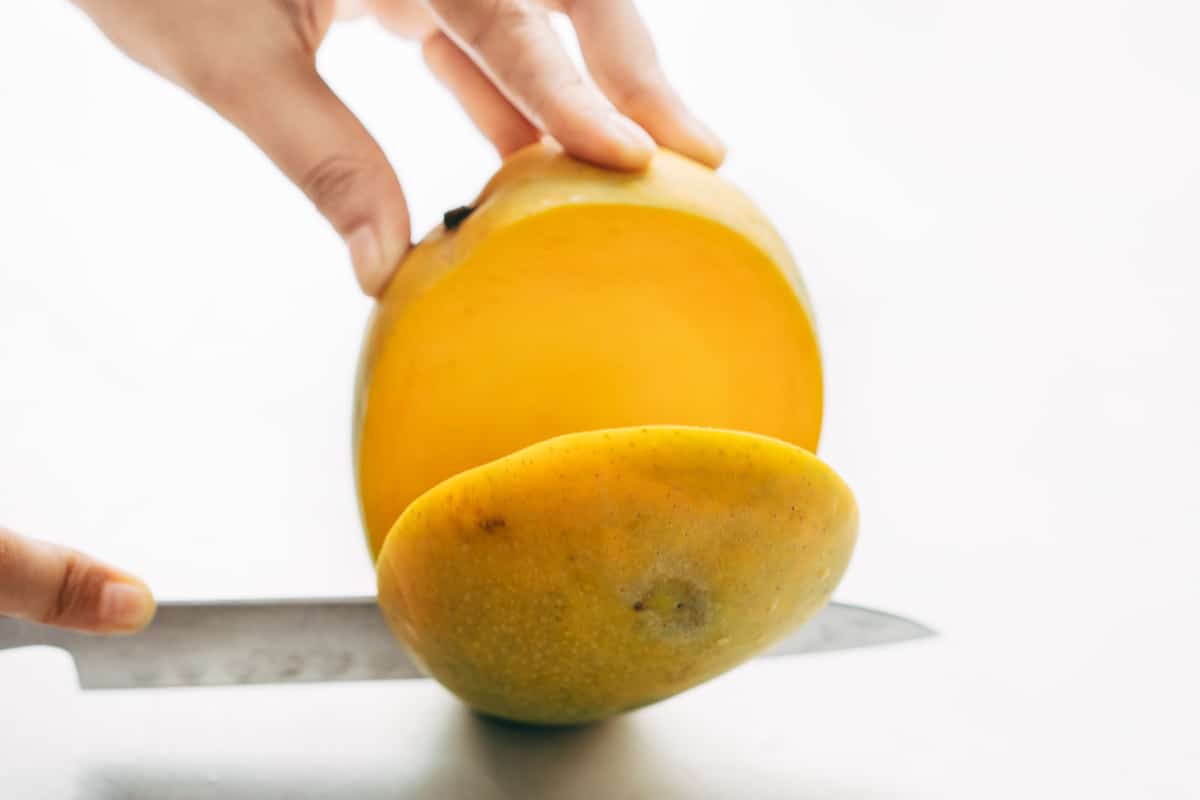
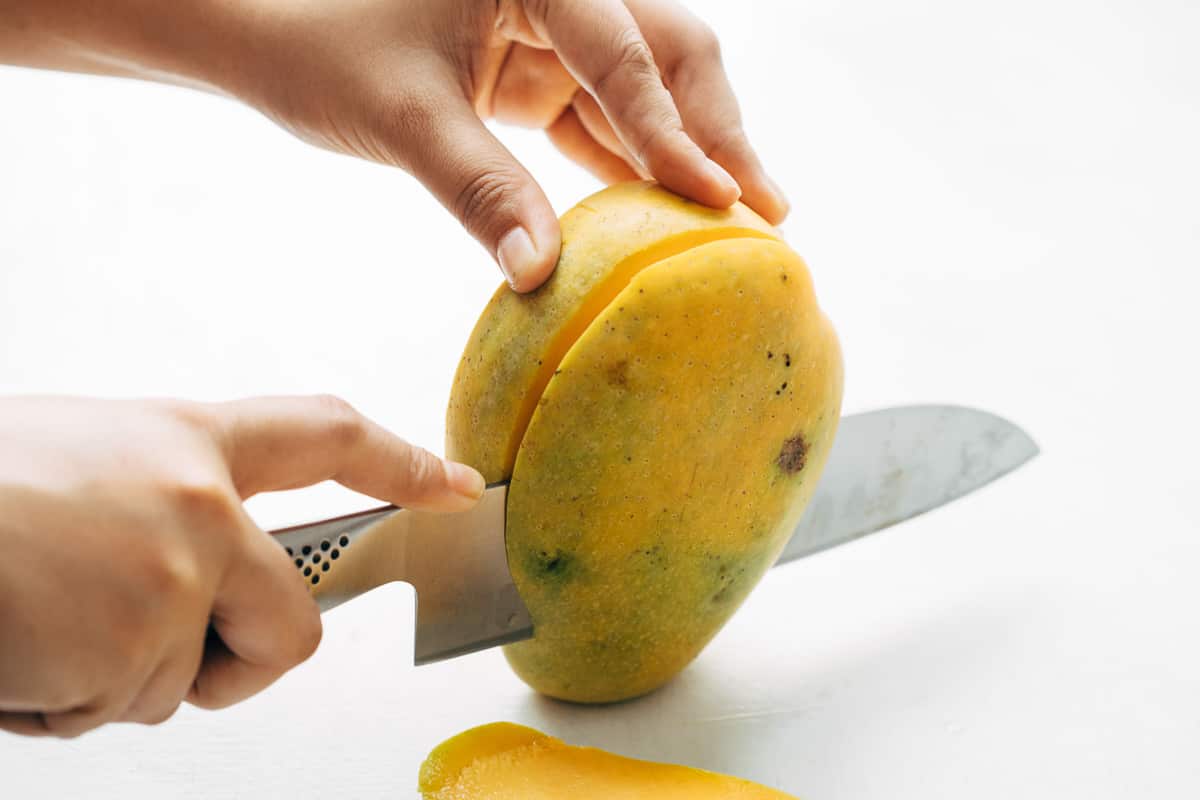
Step 04: Repeat the wedge technique on either side of the cheek to slice off another segment.
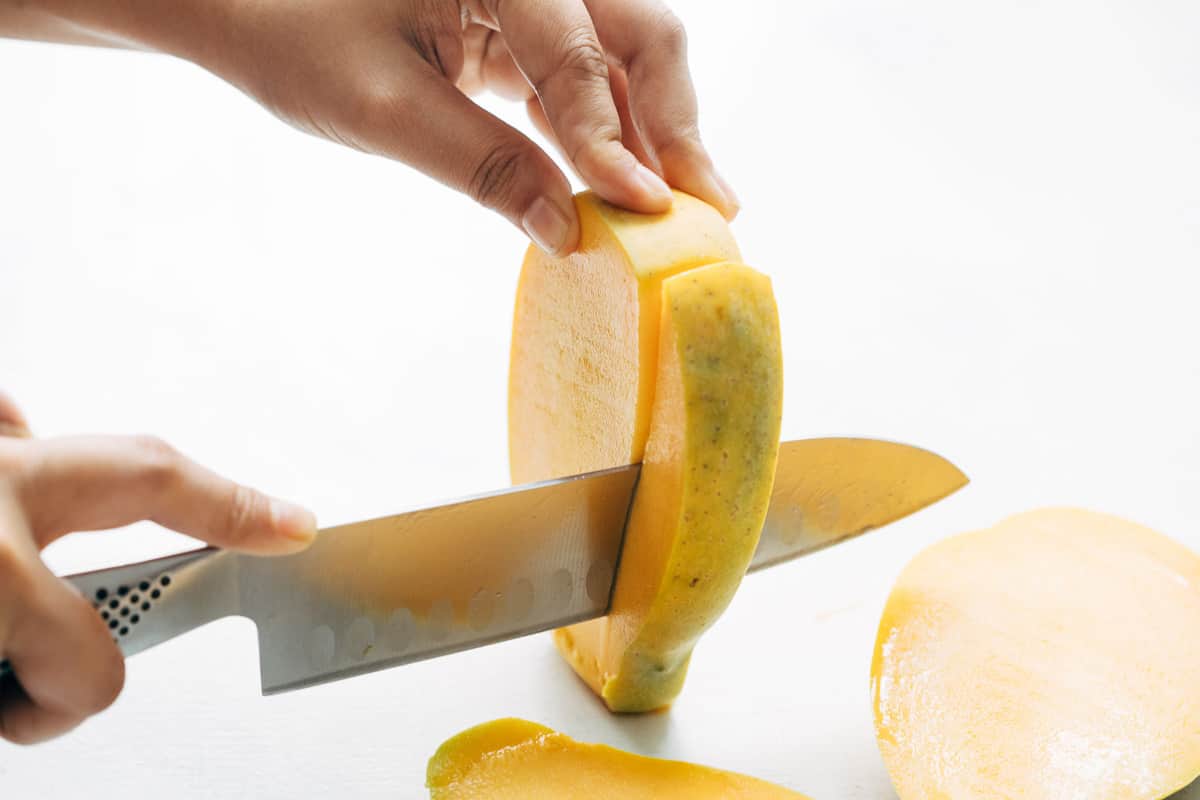
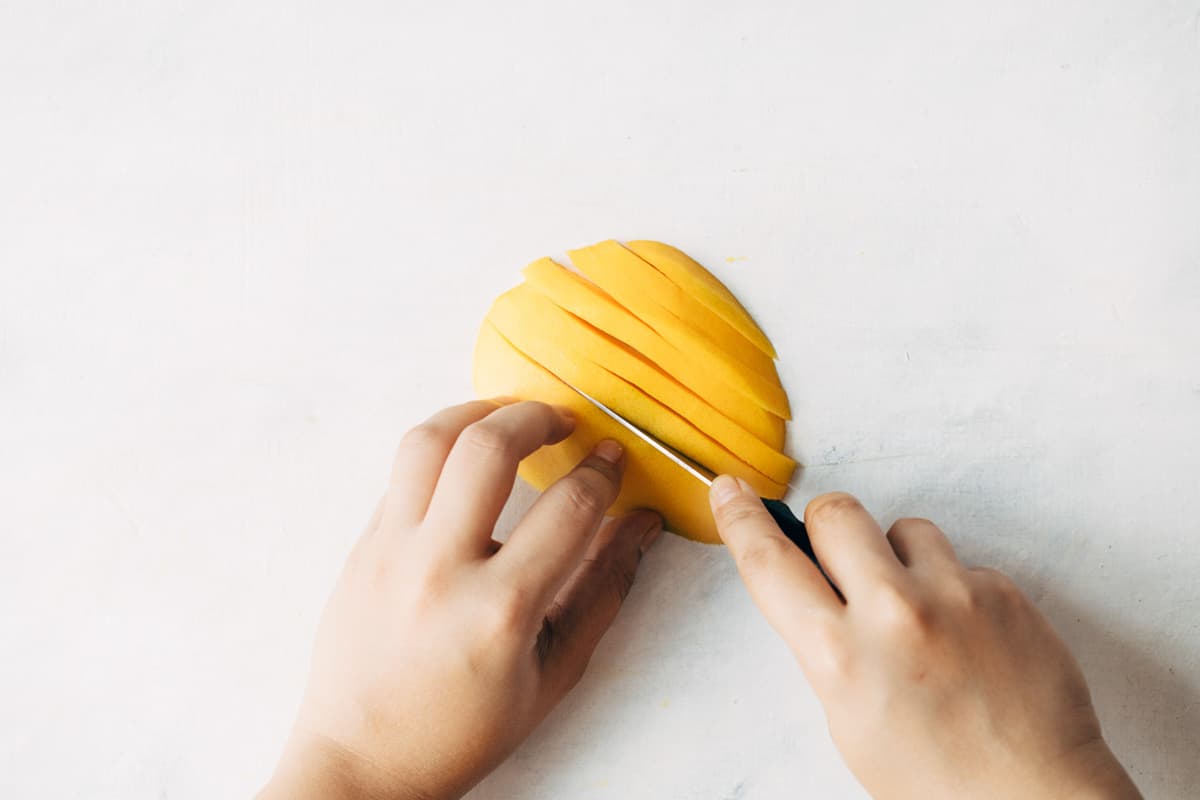
Step 05: You can further cut these cheeks into straight wedges. After cutting out the wedges, you will be left with the seed.
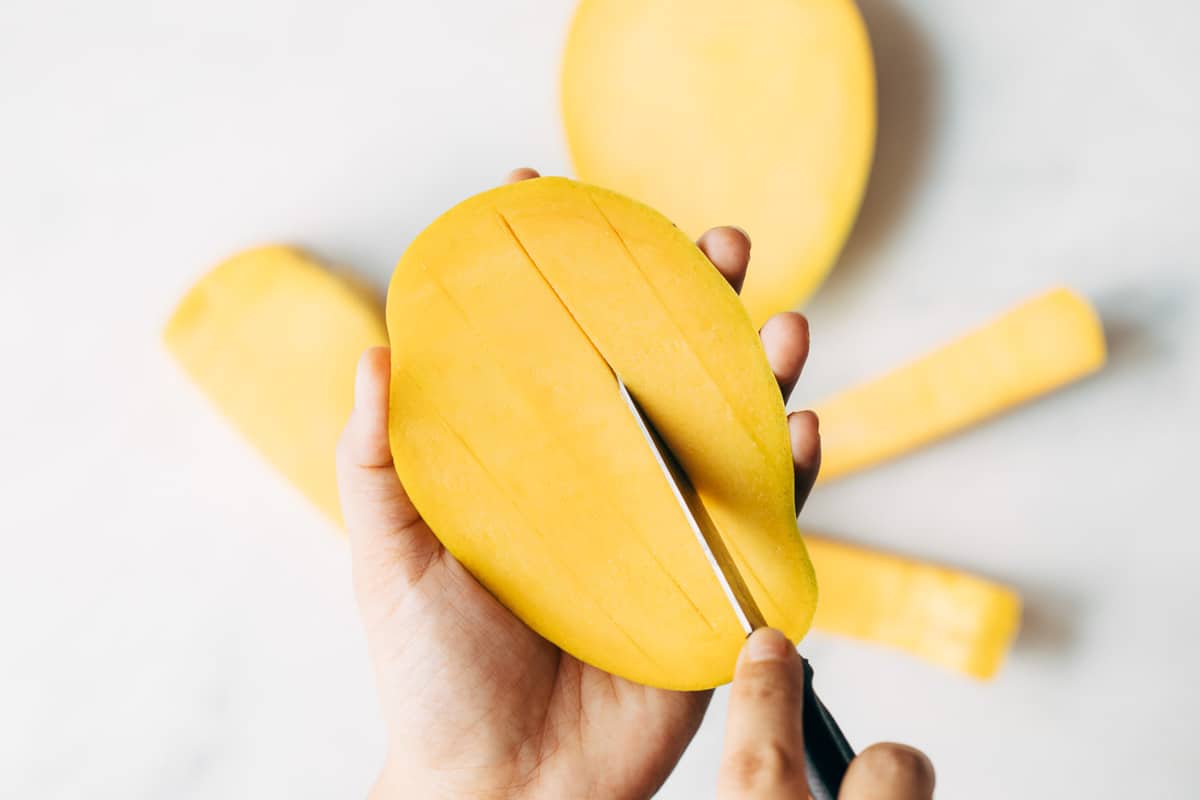
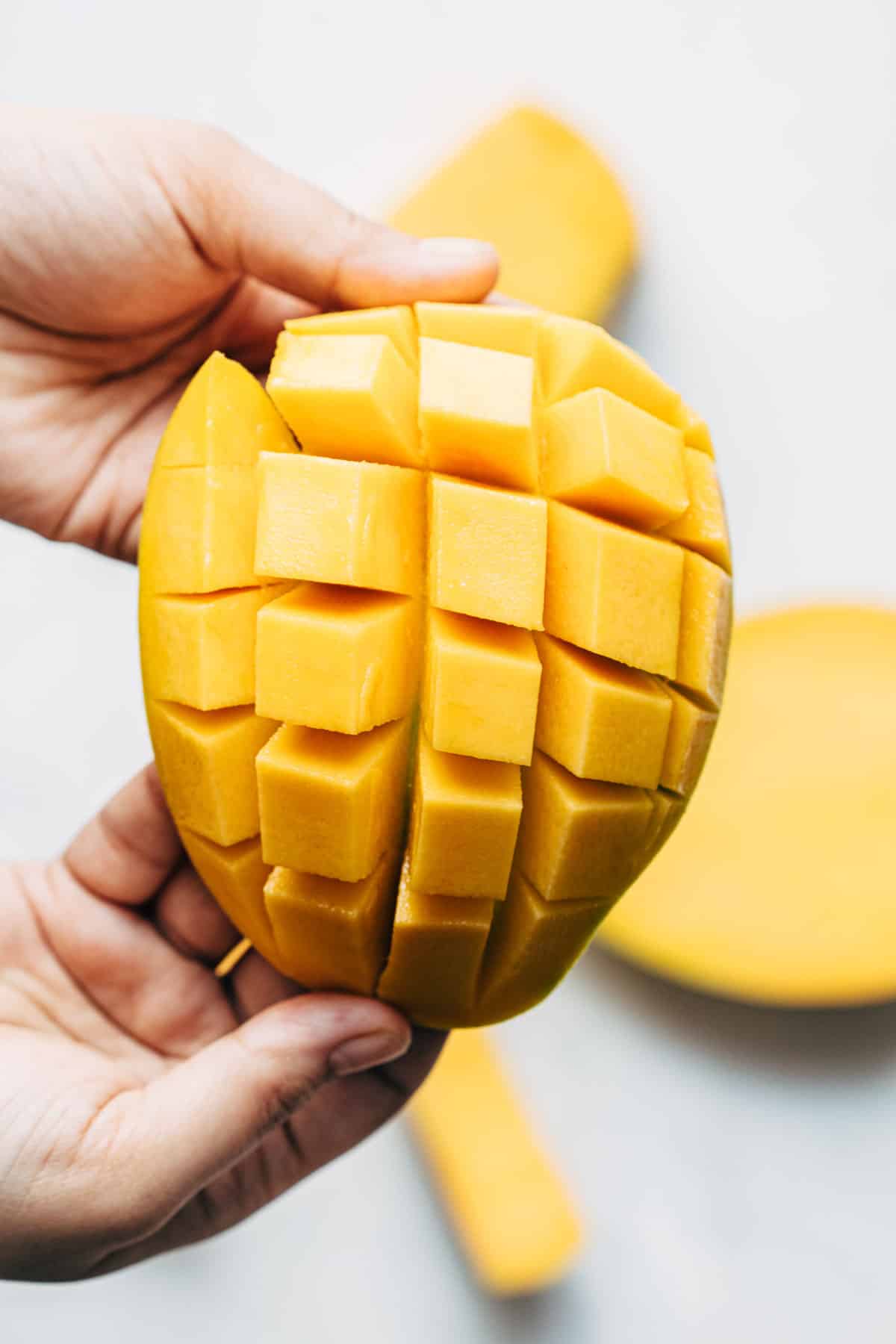
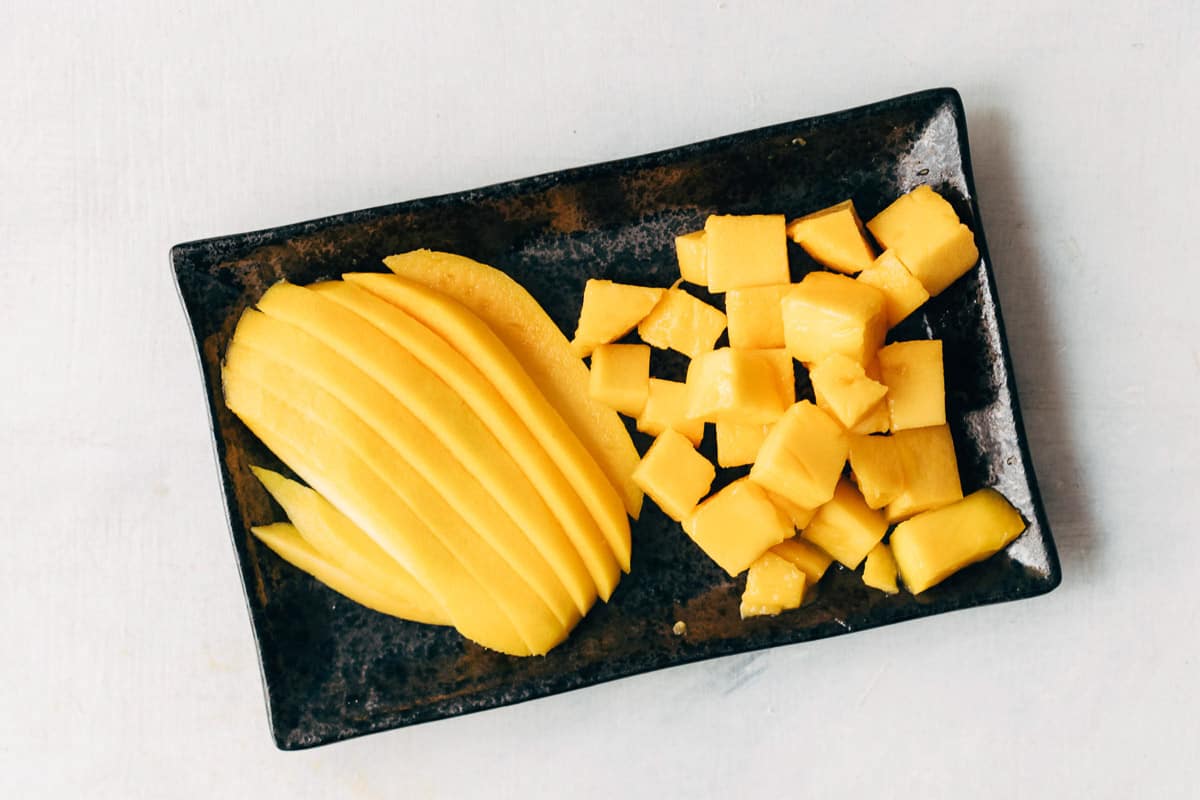
Step 06: Hold one of the cheeks in your palm and use a paring knife to make horizontal and vertical cuts. Then you can use a spoon to scoop out the flesh and get perfect mango dices.
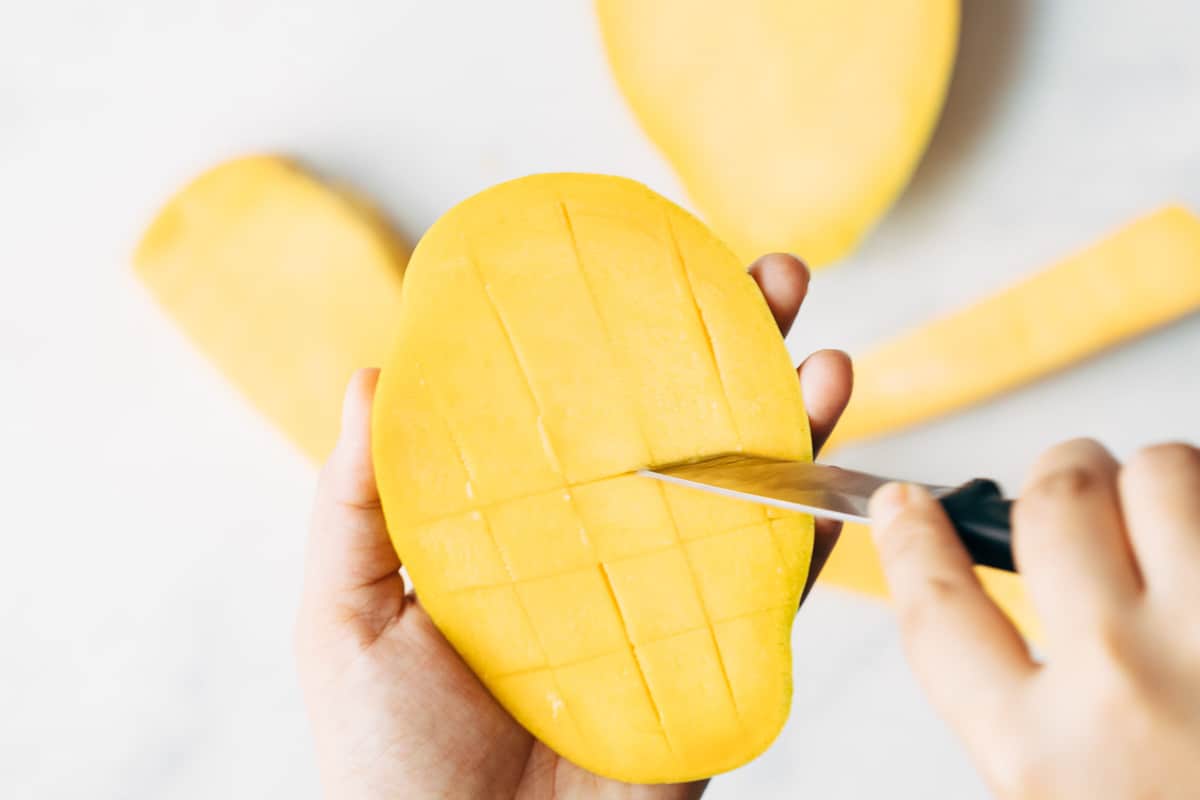
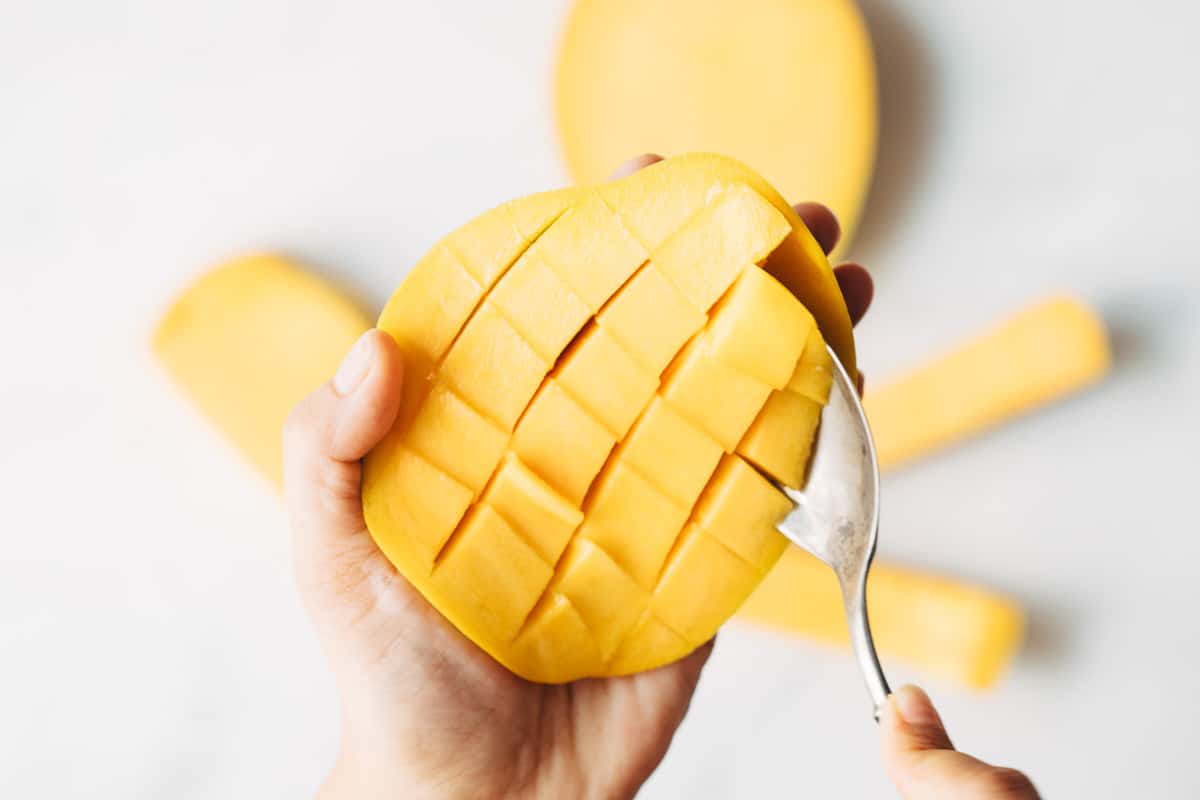
Optional – Take a clean sharp-edged glass and holding the skin of the cheeks in your palm, slide the glass at the lower edge and gently slide along the shape of the mango and the whole semi oval shaped pulp will fall right into the glass. Repeat till all the pulp is extracted.
Voila! Your perfectly cut mango is ready to be served!
Method #2: Cutting A Ripe Mango After Peeling
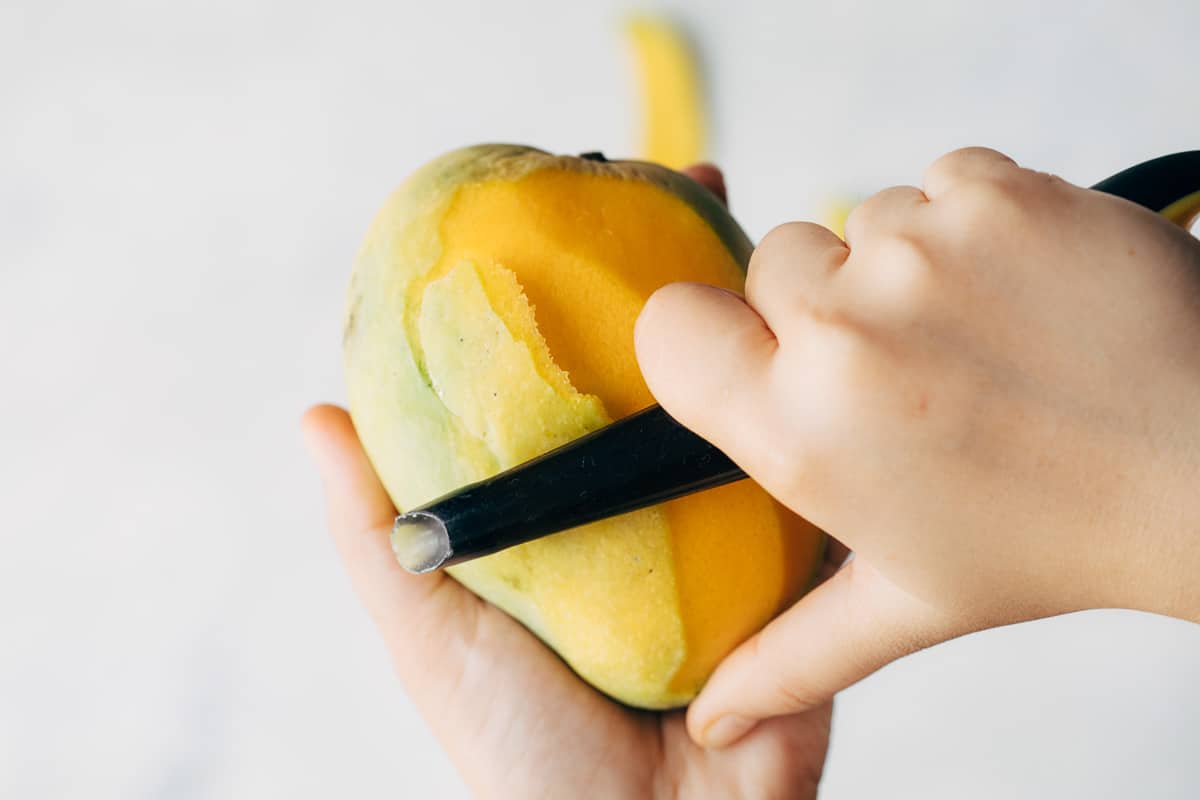
For this method, start by peeling the skin off very gently. It’s important to pick mangoes that are firm and do not have dents in the skin or feel too soft on touch. While peeling a mango, see that you don’t feel like a superhero and use way too much pressure as you may land up flinging the slippery fruit out of your hand and on the floor or again, you may just squeeze and waste some precious pulp in the process.
Step 01: Carefully peel the skin off the mango in a way that does not waste the real good stuff! (the pulp!). You can do this by placing your knife/peeler on top and bringing it all the way down to take the peel off in one smooth motion.
Step 02: When it comes to cutting the cheeks, the process is the same as the one described in the method above.
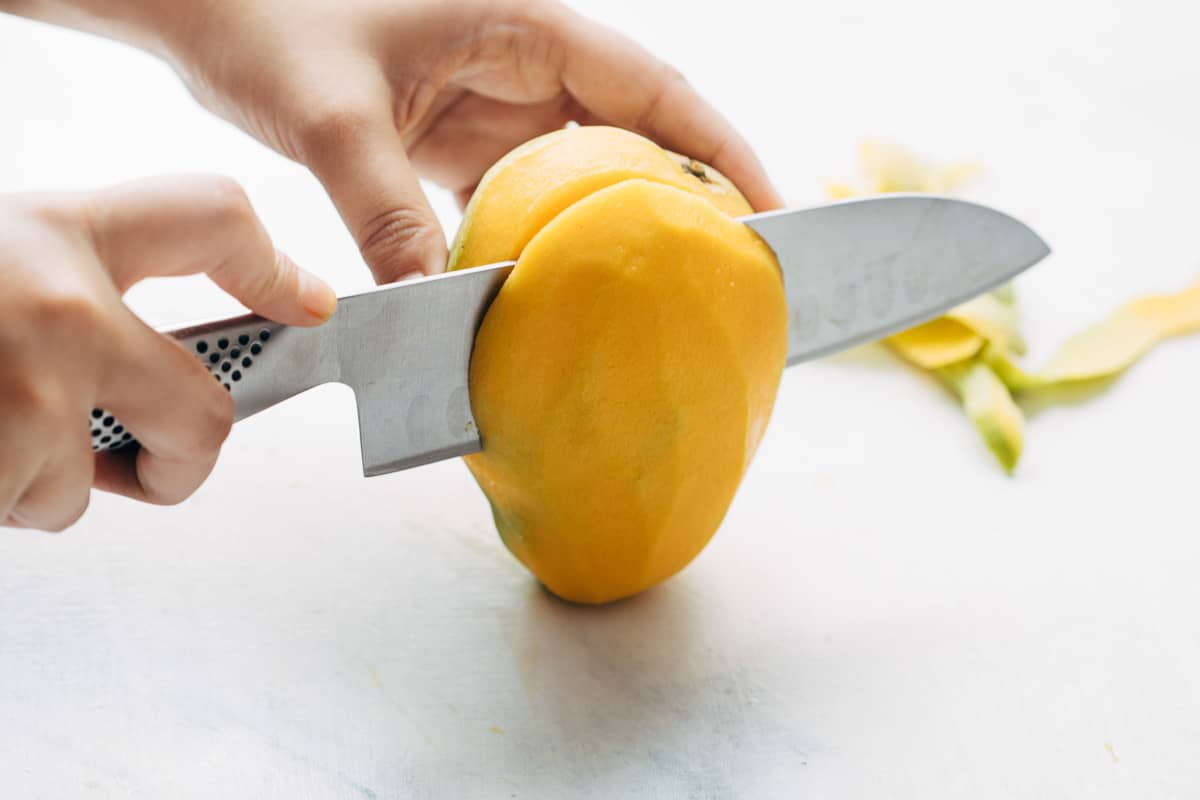
Step 03: If you wish to make small dices, start with making delicate cuts horizontally and vertically forming a grid on the cheeks. Alternatively, if you like wedges then just make vertical cuts as per the thickness required
Top Tips To Cut A Rip Mango
- Always peel off the mango skin very gently and lightly. You don’t want to apply too much pressure or slice off too deep into the flesh, otherwise you might end up wasting a lot of fruit.
- Pick mangoes that are firm and do not have dents in the skin or feel too soft on touch.
- While peeling the skin, hold the fruit delicately but firmly. Apply too much pressure may land up in you flinging the slippery fruit out of your hand and on the floor.
How To Cut A Raw Mango
Mangoes can be eaten either raw or ripe. The raw ones (underripe mangoes which are green in colour and really firm to touch, like an apple) may have a very sour flavor sometimes. Some on the other hand may have a sweet-sour flavor, like the Totapuri which is grown in South India and is long in shape and pointed at the ends. This kind of raw mango can be eaten peeled or unpeeled.
Step 01: Peeling a Totapuri or any raw mango is really no rocket science. Just cut the stem off and placing a sharp knife diagonally at a 60-degree angle, start spinning the mango all around so that the skin comes off as a whole ribbon. This peeled skin can be rolled up to form a rose flower and used as a decorative on a salad plate. (Because cooking is an art! 😉 ).
2. Now get back to where the stem was and slice right through the cheek and then cut it into any desired shape. Repeat on the other side and you are then left with the seed containing some flesh on either side.
3. Slice off the flesh in a wedge shape to get the maximum out of this yummy fruit.
Recipe Suggestion: Raw Mango and Turmeric Rice is a great way to cook with raw mangoes
Varieties of Mangoes
India has a lot of mango varieties, but there are around 12 famous varieties that make it to the list because of their juicy texture and sweet flavor. Some also make it to the list for being the best mangoes that can be eaten raw and can be used to make pickles, chutneys, dips, curries and even just sliced and sprinkled with salt and red chili powder.
The Alphonso is the most popular and is also known as Ratnagiri/ Devgarh /Hapus and is grown in Maharashtra. It is unbeatable in taste and texture and is the main reason Indians call this the King fruit. It is sold by dozens and can range anywhere between 220/- per dozen to 1000/- per dozen. The other famous varieties found in India are Raspuri and Badami (also known as the Karnataka Alphonso) from Karnataka, Chausa of North India, Dasehri and Langra from UP, Kesar from Gujarat, Mukgoba from Tamil Nadu, Neelam mainly from Hyderabad and Himsagar from Bengal.
Mango Recipes
We are a big fans of mangoes, and every season I love making different things with mangoes. Here are some of my favorite recipes you definitely need to try this year:
- Mango Cheesecake Mousse
- Mango Cilantro Salad Dressing
- Mangalorean Ripe Mango Curry
- Some good ol’ Homemade Mango Ice Cream
- Grilled Chicken Mango Salad
- Thai Peanut Mango Quinoa Salad
- No Bake Mango Cheesecake Mousse
- Mango Mustard Dipping Sauce
- Mango Bell Pepper Spring Rolls
- Healthy Peach Mango Smoothie
- Fish Tacos with Mango Salsa
- Prawn and Mango Salad
- Raw Mango Turmeric Brown Rice
- Mango Jalapeno Fizzy Cocktail
- Mango Chia Seed Breakfast Drink